

Last updated: 17 November 2026. General information, not financial advice.
Picture the first Monday back after Christmas. The tree is down, the fridge is full of leftovers nobody wants, and an email pops up: your credit card statement is ready. You open it, wince, and close the app. Payday is still weeks away, and the “fresh start” everyone keeps talking about feels like something other people can afford.
When we were saving for our first home on one salary, I learned that January isn’t the month for a dramatic new budget. It’s the month for small, specific challenges that win back money quickly and feel good to tick off. One cancelled subscription. One week of eating from the cupboards. One bag of things sold on Vinted. None of them is life-changing on its own. Together, they add up.
The short answer: the best January money saving challenges are short, specific and easy to track, like cancelling three subscriptions, doing a pantry week or selling one thing a day. Pick two or three that suit your household, track what each one saves, and move that money straight to savings or your Christmas bill.
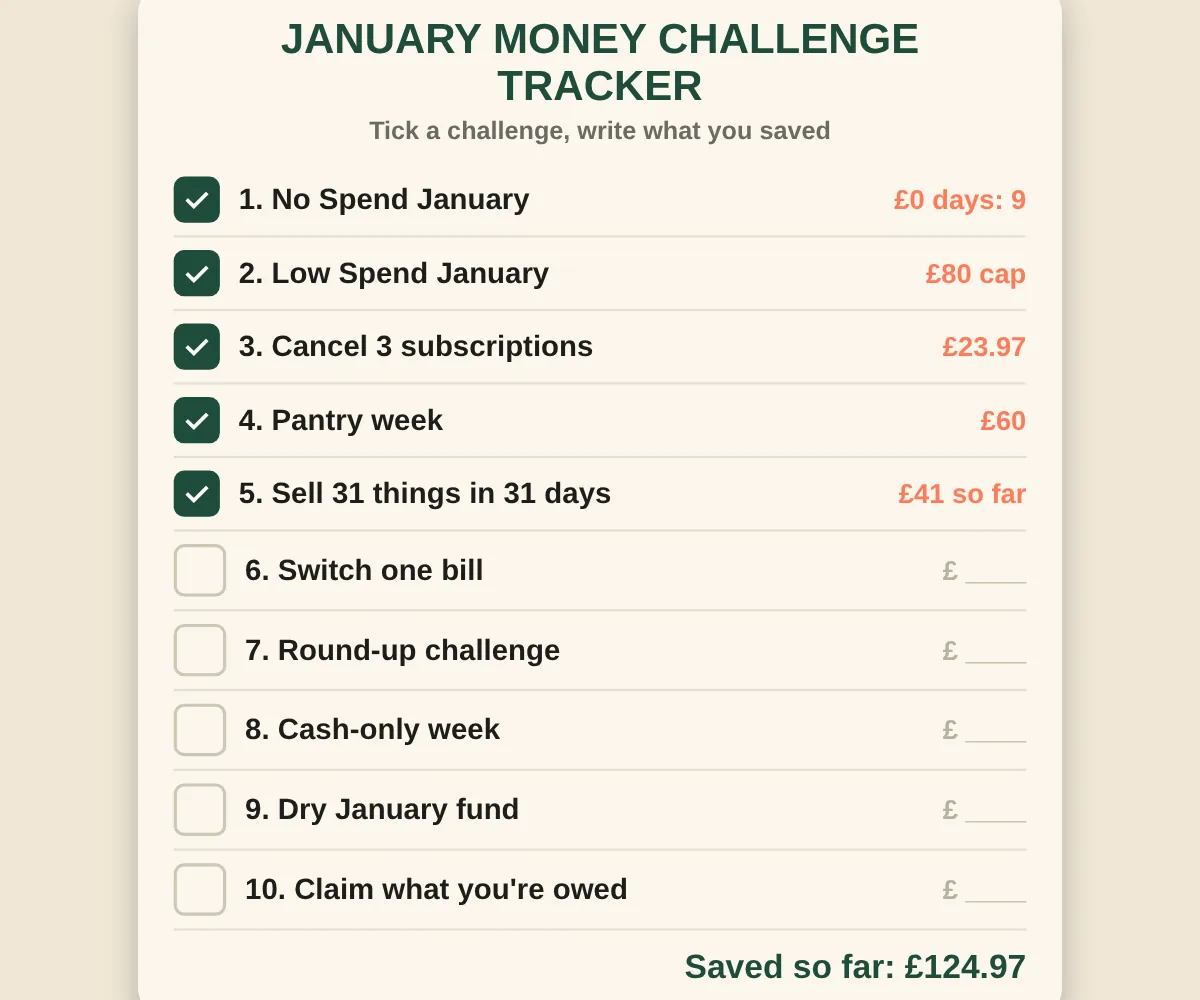
Want something gentler than a full no-spend challenge? Read my low spend month ideas, with the rules I follow.
January money saving challenges at a glance
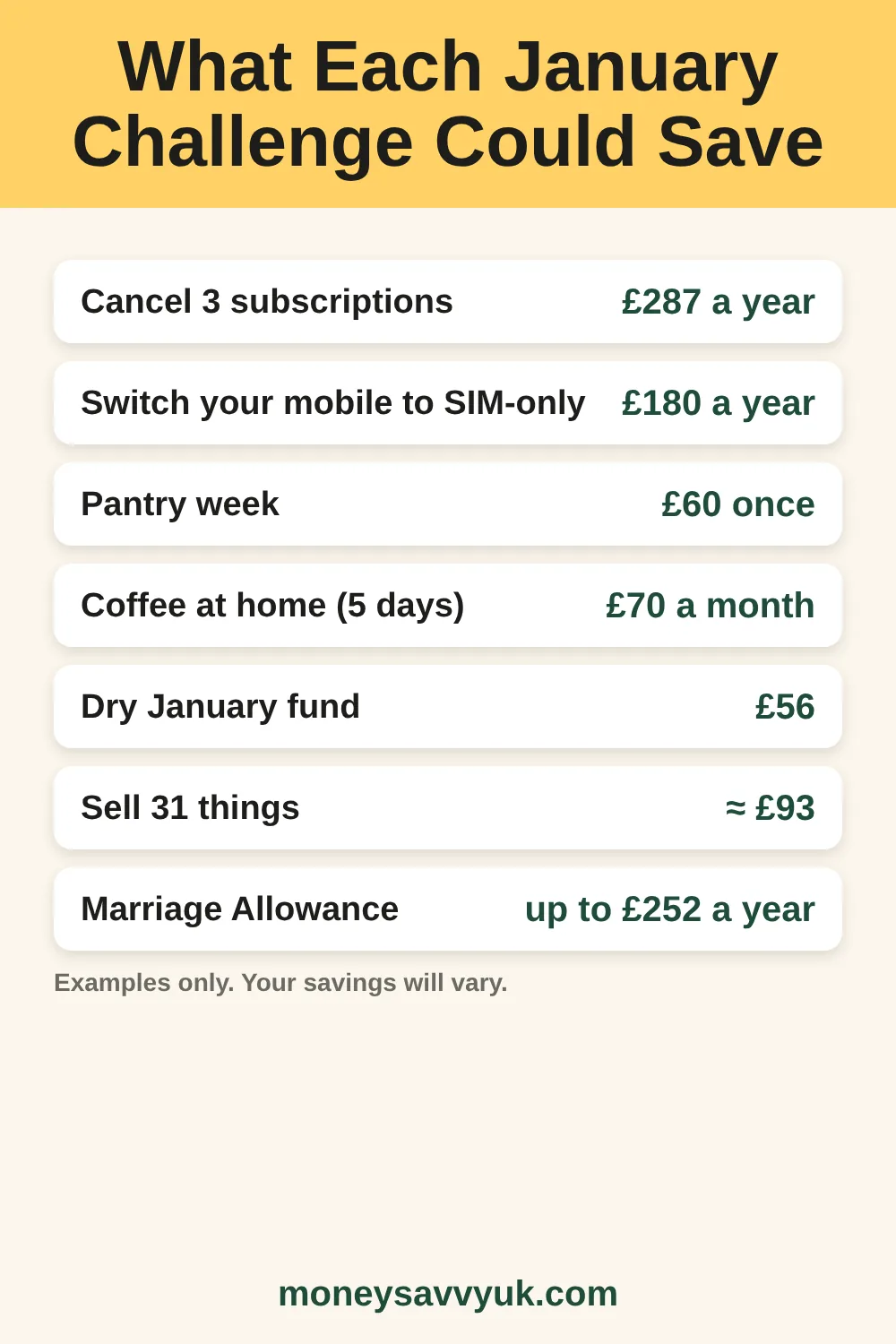
| Challenge | Effort | Example saving | Best for |
|---|---|---|---|
| 1. No Spend January | High | Varies | A full reset |
| 2. Low Spend January | Medium | £70 a month on coffees alone | Families |
| 3. Cancel 3 subscriptions | Low | £287 a year | Everyone |
| 4. Pantry week | Medium | £60 in one week | Full cupboards after Christmas |
| 5. Sell 31 things in 31 days | Medium | About £93 | Decluttering |
| 6. Switch one bill | Low | £180 a year | Out-of-contract bills |
| 7. Round-up challenge | Very low | About £30 a month | Card spenders |
| 8. Cash-only week | Medium | Varies | Impulse spenders |
| 9. Dry January fund | Low | £56 | Anyone doing Dry January |
| 10. Claim what you’re owed | Low | Up to £252 a year | Couples, workers |
10 January money saving challenges for UK households
1. No Spend January
How it works: for 31 days, spend only on essentials: rent, bills, the food shop, travel to work and medicine. Everything else waits until February.
Make it easier: decide your grey areas (birthdays, kids’ clubs) before 1 January and plan free weekends. My No Spend January guide has the full rules, 31 free things to do and a printable tracker.
2. Low Spend January
How it works: keep the essentials, plus one small, fixed “fun” budget for the month, such as £20 a week. When it’s gone, it’s gone.
Worked example: if you normally buy a £3.50 coffee five days a week, that’s £70 over four weeks. Make coffee at home and keep one treat a week, and you’ve kept most of that £70.
3. Cancel 3 subscriptions
How it works: go through your bank statement line by line and cancel three subscriptions you don’t use enough. Free trials from Christmas often roll into paid plans in January.
Worked example: cancelling three subscriptions at £10.99, £7.99 and £4.99 saves £23.97 a month, or £287.64 a year.
Make it easier: my free 7-Day Financial Reset Kit walks you through finding every subscription and renewal date in 15 minutes a day. See also how to cancel subscriptions in the UK.
4. Pantry week
How it works: for one week, cook mostly from what’s already in your cupboards, fridge and freezer. Only buy fresh basics like milk, bread and fruit.
Worked example: if your usual weekly shop is £100 and you spend £40 on top-ups during a pantry week, you save £60, and use up Christmas leftovers before they go to waste.
Make it easier: write a list of everything you have, then plan seven meals around it. My guide to cutting your grocery bill has more ideas.
5. Sell 31 things in 31 days
How it works: list one unwanted item every day in January: unwanted gifts, outgrown clothes, books, DVDs or toys.
Worked example: if each item sells for an average of £3, that’s £93 by the end of the month, plus a tidier home.
Make it easier: start with my guides to selling on Vinted and things to sell for cash. Selling your own unwanted things usually isn’t taxable, but platforms report sellers with 30 or more sales, or around £1,700 a year, to HMRC. My Vinted tax guide explains what that means. If you’re selling a lot, my Vinted Seller Spreadsheet to track sales and profit is on Etsy.
6. Switch one bill
How it works: pick one bill this month (mobile, broadband, car or home insurance) and check whether you’re out of contract or overpaying.
Worked example: moving an out-of-contract £25-a-month mobile plan to a £10 SIM-only deal saves £15 a month, or £180 a year.
Make it easier: do one bill a week through January and February, rather than all at once. Bank switching offers can also pay you to move your current account; see current bank switching offers.
7. Round-up challenge
How it works: turn on round-ups in your banking app, so every card payment is rounded up to the nearest pound and the difference goes to a savings pot.
Worked example: 60 card payments in a month, with an average round-up of 50p, adds £30 to your savings without you noticing.
8. Cash-only week
How it works: take out your weekly budget for food and spending in cash, leave your cards at home, and see how far it stretches.
Make it easier: split the cash into envelopes for food, travel and “everything else”. Many people find handing over notes makes them stop and think in a way tapping a card doesn’t.
9. Dry January fund
How it works: if you’re doing Dry January, move the money you’d usually spend on alcohol into savings each Friday.
Worked example: two £7 bottles of wine a week is £14. Over four weeks, that’s £56 saved.
10. Claim what you’re owed
How it works: spend one evening checking for money you’re entitled to but haven’t claimed.
- Marriage Allowance: if you’re married or in a civil partnership, one of you earns less than the £12,570 Personal Allowance and the other is a basic-rate taxpayer, you could save up to £252 a year, and backdate your claim for up to four previous tax years. See my Marriage Allowance guide or apply on GOV.UK.
- Tax code and tax refunds: check your tax code is right, and see whether you can claim tax relief for work expenses. My tax refund guide explains how.
Your 4-week January money plan
If you’d like a ready-made plan, here’s how I’d combine the challenges over January without it feeling overwhelming. Each week has one “admin” job and one habit.
| Week | Admin job (one evening) | Habit for the week |
|---|---|---|
| Week 1 (1–7 Jan) | Cancel 3 subscriptions | Pantry week: cook from the cupboards |
| Week 2 (8–14 Jan) | Turn on bank round-ups | List one item to sell every day |
| Week 3 (15–21 Jan) | Switch one bill | Cash-only week |
| Week 4 (22–31 Jan) | Claim what you’re owed (Marriage Allowance, tax code) | Low spend week, with a small fun budget |
By the end of the month you’ll have three things that keep saving all year (fewer subscriptions, round-ups and a cheaper bill), plus some one-off cash from the pantry week and selling.
January money saving challenges for your situation
If money is very tight
Focus on the challenges that cost nothing to start and free up cash quickly: the pantry week, selling unwanted items and cancelling subscriptions. Check you’re claiming everything you’re entitled to. The free benefits calculators on the government-backed MoneyHelper website take about 15 minutes.
If you’re a family
Make it a team game. Let children colour in the tracker, choose a dinner for pantry week, or pick toys to sell, with a share of the money going into their own savings. My guide to teaching kids about money has more ideas.
If you’re a couple
Split the admin: one of you checks subscriptions and bills, the other handles selling and the food shop. Check Marriage Allowance together, because it’s one of the few challenges that can put money back for previous years. See budgeting as a couple.
If you’re self-employed or have a side hustle
Don’t forget the 31 January Self Assessment deadline for the online tax return and any tax owed. Set money aside before you spend what you save in January. My Self Assessment guide explains the dates.
Common January money mistakes
- Trying all ten challenges at once: pick two or three and finish them.
- Not moving the money: a cancelled subscription only helps if that £10.99 goes into savings or your credit card. Move it the same day.
- Paying only the minimum on Christmas debt: put your challenge savings towards the highest-interest debt first.
- Forgetting February: January is long, but February bills arrive quickly. Keep one challenge going into February.
What to do with the money you save
- Clear any Christmas debt, starting with the highest interest rate. My debt snowball vs avalanche guide explains which order to pay.
- Build a starter emergency fund of £500 to £1,000 in an easy-access savings account.
- Set up sinking funds for costs you know are coming, like the MOT, TV Licence and next Christmas. See my 25 sinking funds categories.
How to pick your January challenge
- Short on time? Choose 3, 7 and 10: they take an evening each and keep saving all year.
- Christmas bill to clear? Combine 4 and 5 for quick cash, and pay it straight onto the card.
- Want a full reset? Try 1 or 2 for the whole month.
Whatever you choose, write down what each challenge saves on your tracker, and move the money the same day so it doesn’t quietly get spent.
Planners to track your January challenges
2027 Budget Planner UK (printable & digital): Family budget binder with a bill tracker, savings pots and spending log, in £ with UK bills built in. View on Etsy →
Vinted Seller Spreadsheet (UK): Track what you list, what sells and your profit, in Excel or Google Sheets. View on Etsy →
These are my own planners, sold in my MoneySavvyUK Etsy shop.
Like the cash-only week? Try one of my 12 cash stuffing challenges UK, with free A6 printables.
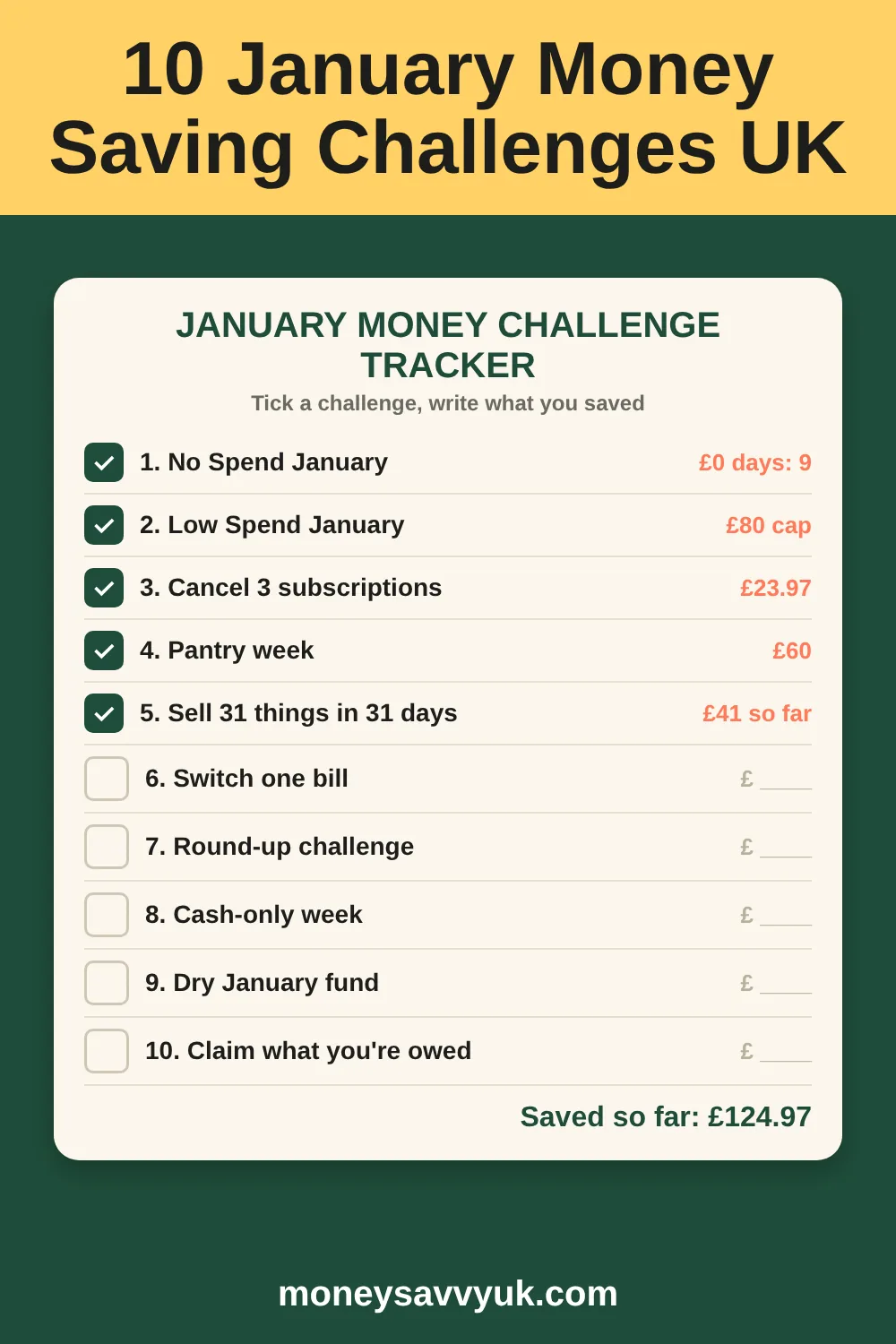
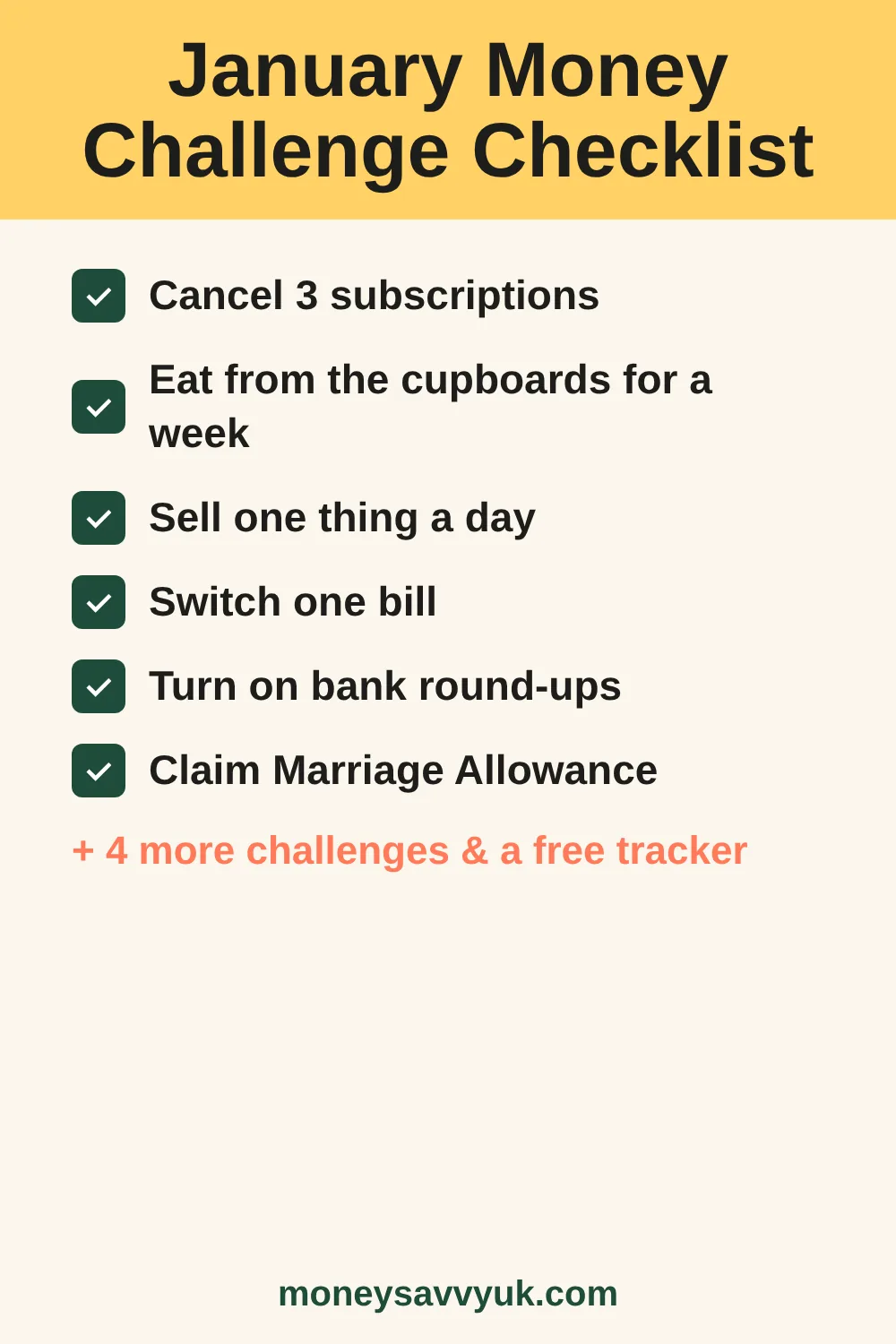
Save these January money challenge pins
Pin your favourite so you can find these challenges again on 1 January.
January money saving challenges: people also ask
What is a January money saving challenge?
A January money saving challenge is a short, specific goal that helps you spend less or save more after Christmas, such as a no spend month, a pantry week or cancelling unused subscriptions. Most last a week or a month and work best when you track what each one saves.
How much money can I save in January?
It depends on your income and spending, but combining two or three challenges can free up a few hundred pounds. For example, cancelling three subscriptions saves £23.97 a month, a pantry week could save £60, and selling 31 items at £3 each brings in about £93.
What’s the easiest money challenge for beginners?
Cancelling three subscriptions or turning on bank round-ups are the easiest places to start. Both take less than an hour, need no willpower afterwards, and keep saving money every month. Once you’ve done those, try a pantry week or a low spend January.
How do I save money after Christmas in the UK?
Start by listing what you owe and when it’s due, then pause non-essential spending until payday. Sell unwanted gifts on Vinted or eBay, eat from the cupboards for a week, cancel unused subscriptions and check you’re claiming allowances such as Marriage Allowance, which is worth up to £252 a year.
When should I start a January money challenge?
Start planning in late December and begin on 1 January, or on your first payday in January if that works better. Many people are paid early before Christmas, so January can feel like five weeks. Starting straight away helps you get to payday without borrowing.
Can I do a January money challenge with kids?
Yes. Children can colour in the tracker, help plan a pantry week, choose toys or clothes to sell on Vinted, and save a share of the money. Keeping it visual and giving them a small reward makes it fun rather than a punishment.
Summary
- Pick two or three January money saving challenges that fit your household, not all ten.
- The quickest wins: cancel subscriptions (£287 a year in our example), switch one bill (£180 a year) and claim Marriage Allowance (up to £252 a year).
- Track every saving on a tracker and move it straight to savings or debt.
Next step: grab the free 7-Day Financial Reset Kit, or plan a full No Spend January. Want something to carry on all year? Try one of my 7 savings challenges.
Examples are illustrative; your savings will depend on your own bills and spending. Tax rules and allowances are for the 2026/27 tax year and can change, so check GOV.UK for your situation. This article is general information, not financial advice.