

Last updated 6 November 2026 · UK household checklist for 2026/27 and planning for 2027
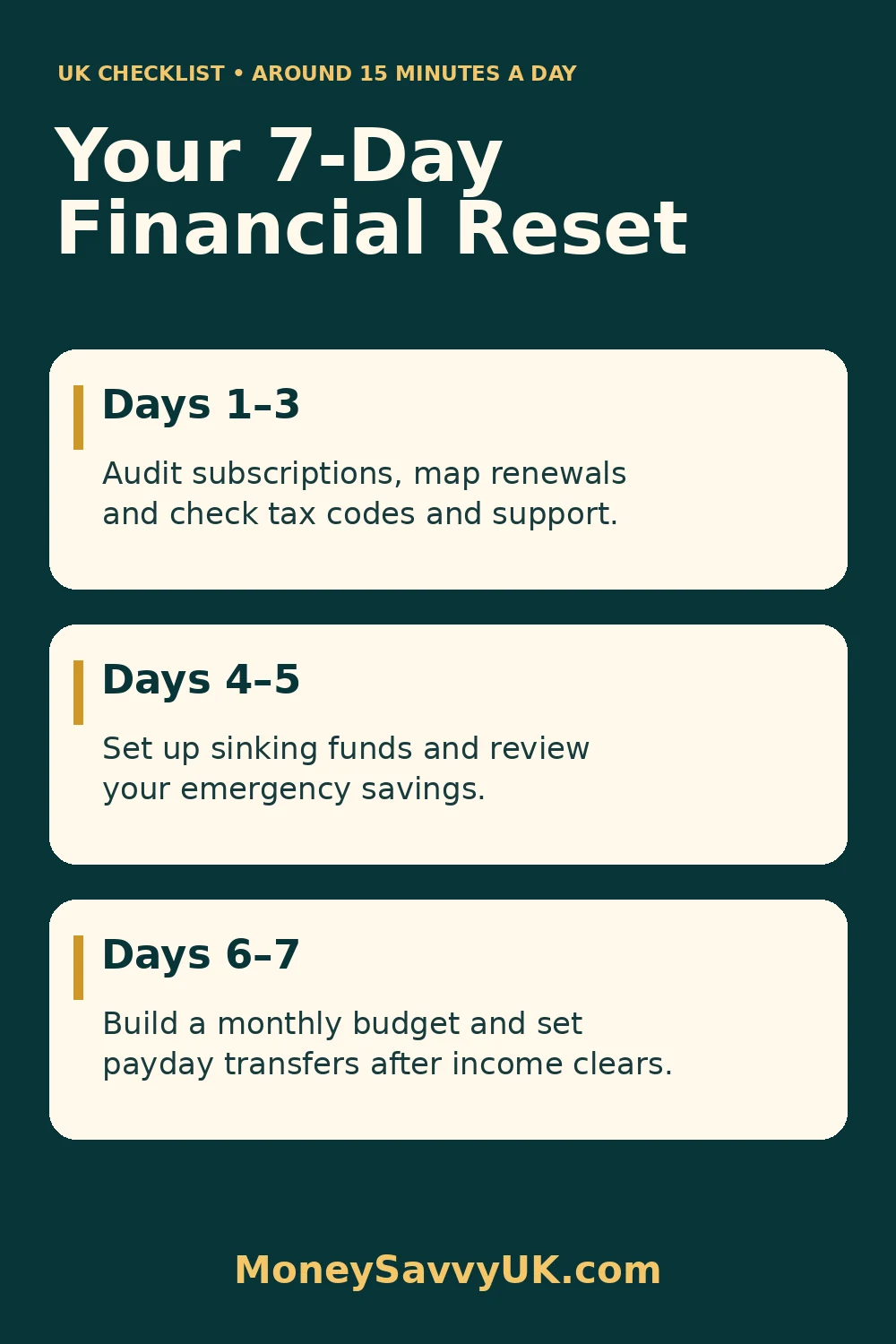
This 7 day financial reset UK checklist gives you one job a day, from cancelling forgotten subscriptions to setting up payday transfers. Spend around 15 minutes getting each job started. By the end of the week, you’ll have a list of bills, savings pots and dates to work from.
If Christmas spending has squeezed your budget, or a higher energy payment or mortgage renewal is looming, start with your bank statement. A week is enough to get the main dates and figures in front of you. Leave time for any calls or paperwork you need to finish later.
Day 1 — Audit your statements and cancel forgotten subscriptions
1. Find what you’re still paying for
Open your last two or three bank and card statements and search for repeat payments. Check your app-store subscriptions and PayPal separately, since the name on your bank statement might hide what you’re paying for. Put each payment on a short list with its cost, next renewal date and whether you still use it.
Cancel through the provider, check the notice period and keep the confirmation. For example, stopping a £9.99 monthly subscription saves £119.88 over 12 months once payments end. Use my UK subscription cancellation guide for the steps if you’re unsure where to start.
Day 2 — Map your annual renewal dates
2. Put the dates in one place
Find your car and home insurance renewal dates, your broadband and mobile minimum-term end dates, and your energy tariff end date if it has one. Set a reminder around 30 days before each date as a prompt to check prices and notice periods. For car insurance, use that first reminder to gather details and compare quotes again nearer renewal.
Check energy Direct Debits separately. I found around £1,000 in credit on my energy account and had to follow up by email to get it back. Check your latest balance and readings, then ask your supplier to explain the payment or review any excess credit. See my winter energy help and Direct Debit guide and the Bills & Renewal Dashboard in my MoneySavvyUK shop.
Day 3 — Check tax codes, unclaimed money and support
3. Start with the checks that fit your household
Open your HMRC Personal Tax Account and compare your current code and estimated income with your payslip or pension statement. If something looks wrong, follow my UK tax code guide. If you’re married or in a civil partnership, use the official Marriage Allowance checker and guidance to see whether your circumstances fit.
Check Council Tax Reduction through your council and see what support applies where you live. If you’re waiting for a winter payment, check the eligibility and dates before counting it in your budget. My November DWP payment dates guide can help you find the relevant scheme.
Day 4 — Set up sinking funds for predictable irregular bills
4. Divide each target by the paydays left
A sinking fund is money set aside for a bill you know will come, even if it’s only once a year. Start with three or four categories you actually need. Think Christmas, school uniforms, car MOT and servicing, and birthdays.
Use the amount still needed and divide by the number of paydays before the bill. If you already have £60 towards a £300 car bill and six paydays left, put aside £40 each payday. My Sinking Funds & Savings Pots tracker gives each target a place to live.
| Pot | Amount still needed | Paydays left | Per payday |
|---|---|---|---|
| Car MOT and service | £240 | 6 | £40 |
| School uniform | £120 | 4 | £30 |
| Christmas | £360 | 12 | £30 |
Day 5 — Ring-fence emergency cash and check its rate
5. Match the account to when you’ll need the money
Keep an emergency pot separate from the money you’re already saving for known bills. Decide how much needs to be available immediately, then compare rates, withdrawal limits and transfer times for the rest. My Emergency Fund Calculator can help you estimate how many months of essentials your savings cover.
An easy-access savings account or Cash ISA can be worth comparing if spare cash is sitting in a low-paying current account. Check the rate after tax, whether a bonus expires and how quickly you can withdraw. See my Cash ISA vs Premium Bonds guide and April 2027 savings tax guide.
Day 6 — Build a realistic zero-based monthly budget
6. Give the money you expect to receive three jobs
Start with take-home income you can reasonably count on. Allocate it to fixed essentials, sinking funds and savings, and spending you can enjoy without borrowing. Include required debt payments and set aside realistic amounts for essentials such as food and transport, even though they vary.
For illustration, £2,000 could cover £1,500 of essentials, £300 for savings and future bills, and £200 of spending. Giving the full £2,000 a job includes money you intend to save. If essentials exceed income, use the monthly budgeting guide to identify the gap before setting up transfers.
Day 7 — Automate your payday transfers
7. Set transfers for after income clears
Set up standing orders for the pots you’ve chosen, timed for when wages usually arrive. Keep enough in your bills account for payments due before your next payday. If your income varies, start with an amount you can manage in a quieter month and top up once you know what came in.
Set a short reminder after the first payday to check what actually moved and what bills are still due. Adjust any amount that left you short. My UK payday routine walks through the checks in order.
What I’d do first
I’d open the bank app, look at the next seven days and check which payments are due. Then I’d set one renewal reminder and choose one irregular bill to save for. If smaller daily jobs suit you better, try my 31-day January Money Reset.
7 day financial reset UK: key takeaways
- Check what renews and when before starting another subscription or contract.
- Keep predictable irregular bills and emergency money in separate pots.
- Set payday transfers you can afford and review them after the first month.
Financial reset FAQs
Can I do a financial reset after Christmas?
Yes. Start with recent spending and upcoming bills, then work through one task a day for seven days.
What is the difference between a sinking fund and an emergency fund?
A sinking fund covers an expected cost, such as your MOT or school uniforms. An emergency fund covers an unexpected expense or a drop in income.
What if my income changes every month?
Build the budget around a conservative estimate and cover essentials first. Set modest automatic transfers and top them up after you know what you were paid.
Sources
Dr Kalpana Govindaraasan is a PhD scientist, former secondary science teacher and mum behind MoneySavvyUK.
I’m not a financial adviser. This guide shares general information and my own experience. It does not constitute regulated financial advice.