

Last updated 6 November 2026 · This checklist covers the 2025/26 return due in January 2027.
If your gross trading income exceeded £1,000 in 2025/26, you generally need to tell HMRC and file online by 31 January 2027. For Vinted side hustle allowable expenses in the UK, compare the trading allowance with eligible costs such as stock, postage and platform fees before you submit.
A Vinted payout is a starting point. Pull the sales and fees statement as well, so you can see what customers paid and which costs were deducted. If you also used the account to clear out your wardrobe, mark personal sales separately. My Vinted tax guide explains the distinction.
£1,000 trading allowance vs actual expenses
Start with gross trading receipts across your relevant side hustles. If you can use the allowance, compare it with your allowable costs and choose the appropriate method. You can’t deduct the trading allowance and actual expenses from the same trading income.
| Calculation | Trading allowance | Actual expenses |
|---|---|---|
| Gross trading receipts | £2,800 | £2,800 |
| Deduction | £1,000 | £1,450 |
| Trading profit for this comparison | £1,800 | £1,350 |
In this example, actual expenses reduce trading profit by £450 more. The change to your tax bill depends on your other income and circumstances. If you made a loss or the allowance does not apply to your income, check HMRC’s trading allowance rules before choosing a method.
The announced £3,000 allowance applies from April 2027. The return due this January still uses the rules for 2025/26. See my Vinted and side-hustle tax timeline if you’re comparing the years.
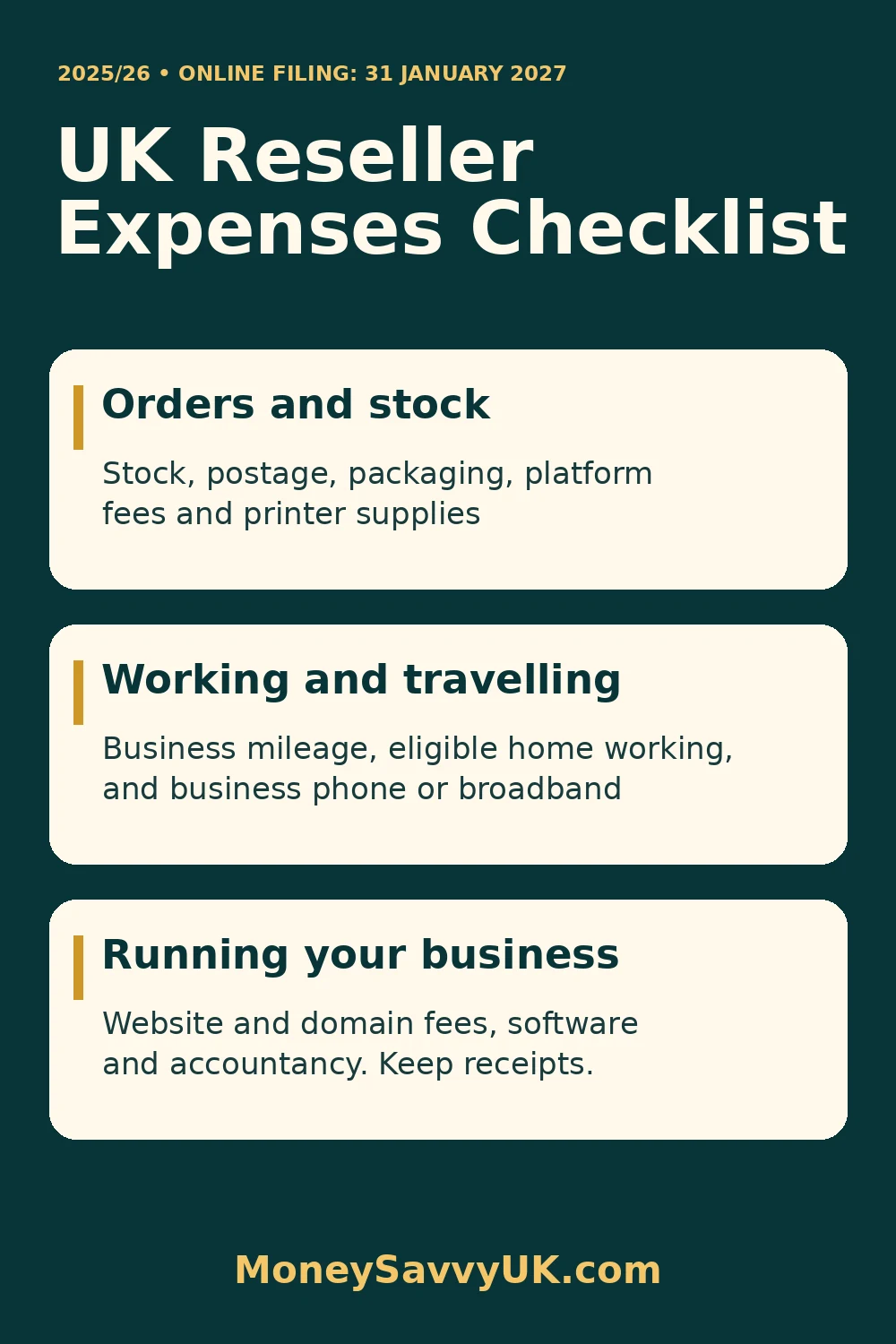
10 allowable expenses UK resellers and side hustlers often miss
1. Stock bought to resell
Keep invoices or receipts showing what you paid and what you bought. Use the stock treatment for your accounting method. Under cash basis, you generally record qualifying stock when you pay for it. Under traditional accounting, unsold stock can affect the deduction.
2. Postage and courier labels
Record business postage you actually paid. If the buyer pays you for postage, record the receipt and the related cost separately. If the platform handles and pays for a label you were never charged for, leave that cost out.
How I handle postage and collection. When I sell heavy items such as furniture on Facebook Marketplace, I offer free collection. If I can deliver locally, I quote a fee depending on whether the buyer is within about five or ten miles. See my Facebook selling guide.
When my laptop broke, its two 8 GB RAM sticks still worked. I listed them as used and sold them for £10 each. They were light enough to post, so I charged postage separately, around £2.99 to £3.99 on top of the item price.
Those were examples of selling my own belongings. If you’re trading and a buyer pays you £10 for an item plus £2.99 for postage, record £12.99 in gross receipts. If you use actual expenses, record the eligible postage you paid separately and keep the receipt.
3. Packaging
Include mailers, boxes, bubble wrap and tape bought for business orders. Keep the receipt and separate anything you used for personal parcels.
4. Platform fees
Record selling fees and paid promotion for trading listings. If a payout is already net of fees, reconcile it to the sales statement so turnover is recorded correctly and the fee is deducted once.
5. Printer supplies
Include the business share of ink, paper and thermal labels. A printer itself may be treated differently depending on your accounting method.
6. Business mileage
Log the date, distance and purpose of trips to post orders or buy stock. A personal shopping trip or ordinary commute is different. If you use HMRC’s simplified mileage method for the vehicle, avoid claiming fuel and running costs again.
7. Working from home
Check HMRC’s simplified home-working rules if you work at home regularly. Keep a monthly record of eligible hours and compare the flat rate with a reasonable business share of actual home costs. Use one method for the same costs.
8. Phone and broadband
Claim the identifiable business proportion and keep a note of how you worked it out. If you use the home-working flat rate, HMRC treats phone and internet separately.
9. Website and domain fees
Keep invoices for business hosting, domain renewals and similar running costs. Separate any personal use. Check how to treat a large one-off build under your accounting method.
10. Software and accountancy
Save invoices for tools used to run the trade, such as bookkeeping subscriptions. Separate fees for business accounts from any personal tax work and check how a one-off software purchase is treated.
My Vinted shipping guide explains how labels work. The Reseller Profit & Inventory Dashboard in my MoneySavvyUK shop gives you a place to log stock, sales and costs. My free 7-Day Financial Reset Kit can help you plan around irregular income.
What you cannot claim
- Personal clothes. Your ordinary wardrobe is personal spending. A coat you bought to wear and later sold in a clear-out is different from stock bought for your trade.
- Everyday lunches. Buying lunch while packing orders or working from home is usually personal spending. HMRC has separate rules for qualifying business travel.
- The private part of mixed-use bills. Claim only the business share you can reasonably identify and support. Keep a note explaining the split.
- Costs already deducted. Check platform exports, bank transactions and receipts against one another so you record each expense once.
What if you can’t afford your January tax bill in one go?
File the return on time even if paying the full bill is difficult. Check the amount and due date in your HMRC account, including whether you have a payment on account. Keep a copy of your calculation and your submission confirmation.
- Work out what you can afford upfront and each month after essentials.
- Use HMRC’s payment plan checker to see whether you can arrange Time to Pay online. Eligibility depends on your account and the amount owed.
- If the online service can’t help, contact HMRC promptly. Ask when instalments would start, what interest may apply and what happens if you miss one.
Follow my Self Assessment checklist for filing. If you’re new to trading and haven’t registered, see my sole trader registration guide and check your deadlines with HMRC.
What I’d do first
Export the sales and payout statements for 6 April 2025 to 5 April 2026. Make three columns for trading receipts, personal sales and business costs. Then compare the two deductions and check the accounting method you’re using before transferring the figures to the return.
Use my self-employed tax calculator for general planning, checking the tax year before using it. My Bills & Renewal Dashboard is an optional way to keep track of payment dates and amounts.
Key takeaways
- Use the 2025/26 rules for the return due 31 January 2027.
- Compare actual allowable expenses with the trading allowance before filing.
- Keep evidence for stock, fees, postage and any business-use split.
- File on time and contact HMRC early if you expect payment difficulties.
Vinted and side hustle expenses FAQs
Can I claim Vinted postage as a business expense?
You can generally claim postage you paid for business orders when using actual expenses. Keep the receipt or platform statement and check who paid for the label.
Can I claim both stock costs and the £1,000 trading allowance?
For the same trading income, choose actual allowable expenses or the trading allowance if eligible. Compare both calculations before submitting your return.
Can I pay my Self Assessment bill in instalments?
HMRC may agree a Time to Pay plan if you cannot pay in full. File by your deadline and use HMRC’s checker or contact HMRC to discuss payment.
Sources
- HMRC allowable expenses and office and equipment costs
- HMRC mileage and home-working simplified expenses
- HMRC January deadline and payment plans
I’m not a financial adviser. This guide is for general information and does not constitute regulated financial or personal tax advice.