

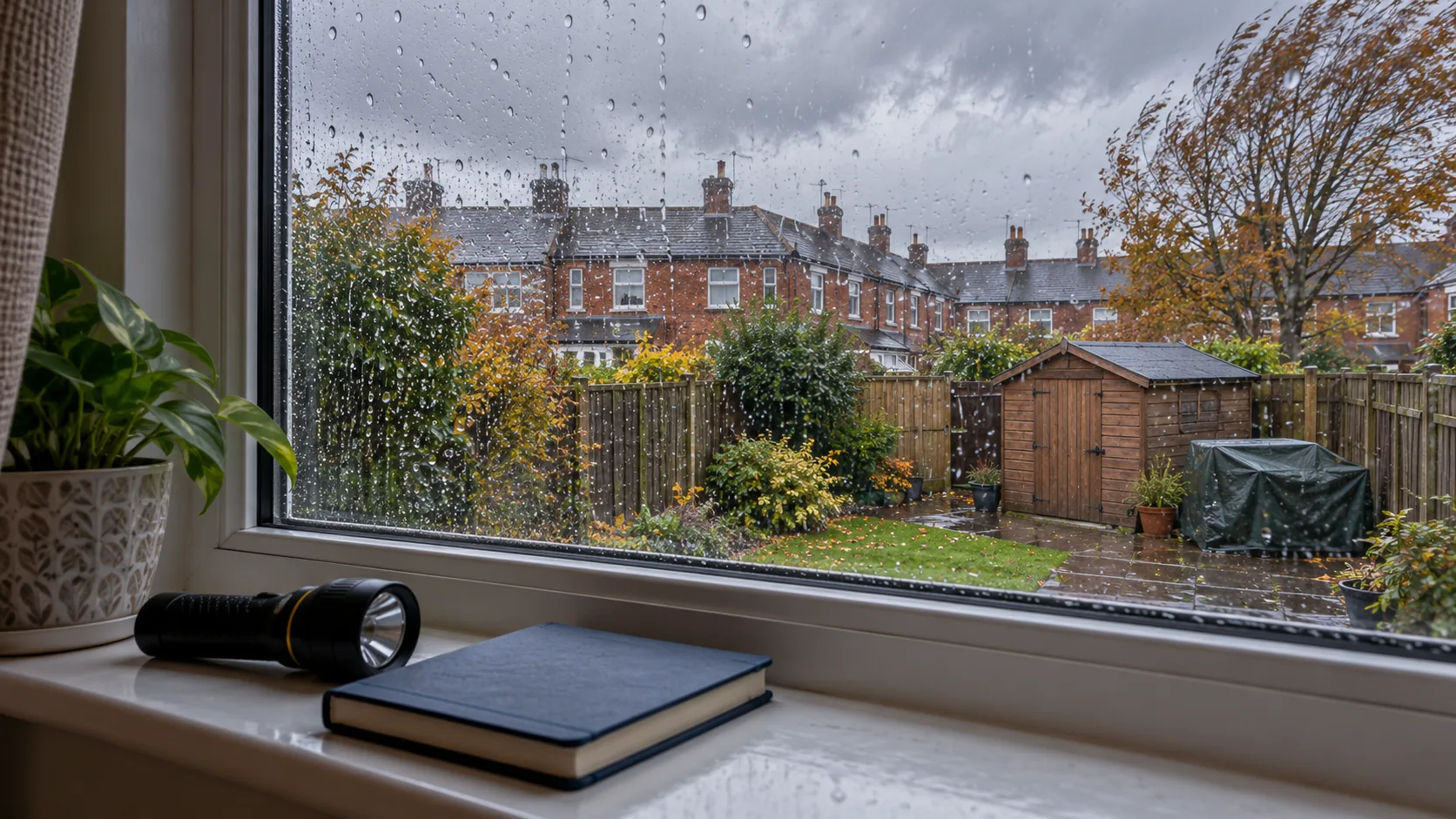
Featured image: original AI-generated illustration.
By Dr Kalpana Govindaraasan
Last updated: 20 October 2026 · Prepared during the 2026/27 tax year.
Storm Austen UK preparations should start with the current forecast for your location, not a dramatic national headline. On 20 October 2026, the Met Office named the storm and warned of disruptive wind and rain for some areas from late Thursday into Friday.
This is a practical household checklist: safe preparation, accessible information and a plan for unexpected costs. It is not a promise that precautions prevent all damage or that an insurer will pay every claim.
Check the live Met Office warnings first. Use our Emergency Fund Calculator for the separate question of your household’s available cash cushion.
Storm Austen UK: 8 Safe Home and Budget Checks
1. Check location and warning times
The Met Office announcement issued at 10:45 BST on 20 October describes a yellow wind warning for southern England and south Wales. It says exposed coastal locations could experience particularly strong gusts. It also makes clear that the track and warnings remain under review.
Read the live warning map for your postcode, its validity period and the stated impacts. Conditions can differ substantially between a sheltered inland street and an exposed coast. A national maximum gust is not the forecast for every home.
Save the official link and check it again before travel or outdoor work. This article records the position on 20 October; the live service takes priority if the warning changes. Do not rely on an old screenshot circulated without its date.
2. Prepare before conditions deteriorate
If conditions are safe, bring in or secure loose garden items that you can manage at ground level. Think about lightweight furniture, toys and other belongings that could blow around. Follow the item’s instructions and do not put yourself at risk trying to restrain something already moving in high winds.
Close and secure accessible windows, doors and outbuildings as appropriate. Keep exits usable. If a task needs a ladder, roof access, specialist equipment or handling something too heavy, arrange qualified help when conditions allow rather than attempting it as an urgent money-saving job.
The decluttering guide can help with a planned clear-out later. During storm preparation, focus on immediate safety and access rather than starting a large sorting project.
3. Look for problems from a safe place
Notice obvious issues from a safe position: a leaking window, water collecting where it should drain or a loose object you can report. Do not climb to inspect gutters, roofs or trees during dangerous weather. A home checklist should not turn into an unsafe repair attempt.
If you rent, tell the landlord or managing agent about a concern and follow the property’s reporting process. Record the date and response. If you own, use an appropriate professional for inspection or work that needs expertise.
For planned property expenses, our homeownership costs guide explains why repairs need their own budget. Preparing money for maintenance does not mean every household can or should perform the work themselves.
4. Keep essential information accessible
Charge your phone and any power bank you already own, and locate a working torch. Keep useful contact details available somewhere you can access without relying entirely on a single device or internet connection. Follow official advice for power cuts and any equipment you depend on.
Think about the needs of children, older relatives, disabled household members and pets. If someone relies on powered medical equipment, follow their provider’s contingency advice and contact the relevant service about specific needs. Do not assume a general blog checklist is sufficient for that situation.
Check whether supplier support or a Priority Services Register is relevant using Ofgem’s consumer information and linked services. Our free help guide offers a starting point for broader household support.
5. Find the insurance policy before a claim
Locate the policy documents, insurer contact route and emergency assistance details where included. Check buildings and contents coverage separately and note the relevant excesses and exclusions. Do not assume a storm name automatically establishes a covered claim.
Write down the questions you would need answered: what evidence is required, whether emergency work needs authorisation and how temporary protective work should be arranged. Ask the insurer about your own policy rather than relying on someone else’s payout story.
If you discover damage, prioritise safety and record it only when safe. Keep receipts and communications. Avoid making an unsupported public claim about the cause or promising a contractor that insurance will cover an invoice before confirming the position.
6. Plan for disruption without panic buying
Review journeys, school or caring arrangements and work commitments against the latest local advice. If a trip is non-essential, consider whether it can wait. Tell the relevant people about changed plans before disruption makes communication harder.
Check what food, lighting and other practical supplies you already have. Buy for an identified need rather than filling a basket because a storm is in the news. Keep routine household budgeting separate from emergency instructions issued by local services.
The grocery budget guide and Grocery Savings Calculator can help plan ordinary spending. They are not a recommended emergency stock list. Follow official guidance where your area faces flooding, loss of utilities or another specific hazard.
7. Review the cash you can actually access
An emergency budget begins with available cash and essential spending, not a universal savings target. Check what is accessible now, which bills are due and what a repair excess or temporary alternative might require. Do not count money already committed to another bill as spare.
Use the Emergency Fund Calculator to model months of essential spending. It does not calculate insurance entitlement, predict storm damage or decide what compensation you will receive.
If there is little room, identify the support route rather than treating that as a personal failure. Review optional spending through the subscription audit. Use the budgeting guide flexibly; a percentage framework cannot replace urgent help with essential costs.
8. Keep recovery records and avoid rushed purchases
After conditions improve, check the property only when safe. Stay away from damaged structures, fallen cables and other hazards, and follow emergency-service and network advice. Get appropriate help rather than assuming a quick DIY fix is harmless.
For repairs, seek clear written information about the work, price and contractor where circumstances allow. Be cautious about unsolicited approaches and pressure to pay immediately. Contact the insurer first where the policy requires it and preserve evidence of any necessary emergency action.
Keep a simple recovery log: issue, date reported, person contacted, action agreed and receipt location. Our calculator directory and home energy guide can help with later budgeting. During an active hazard, current official safety advice comes first.
What I’d do first
I’d check the live local warning, complete only safe ground-level preparation and make essential contacts and policy details accessible. I would leave ladders, roof work and hazardous repairs to the appropriate professionals.
Frequently asked questions
Is the whole UK facing the same Storm Austen conditions?
No. The Met Office announcement identifies particular warning areas, and the map and timing can change. Check the live warning for your own location. Do not apply the highest possible coastal gust to every household or treat an old screenshot as the current forecast.
Should I clear gutters before the storm?
Only arrange work that can be done safely and appropriately. Do not climb a ladder or access a roof in dangerous conditions to follow a checklist. If work needs height access or expertise, use a suitable professional when conditions permit.
Will home insurance cover storm damage?
That depends on the policy, circumstances, exclusions and claims assessment. A named storm does not automatically guarantee payment. Read your documents, contact the insurer and follow its evidence and authorisation requirements while prioritising safety.
How much emergency money should I have?
There is no single amount that fits every household. Start with essential expenses, accessible savings and known commitments. The calculator can model a cushion, but if an immediate cost is unaffordable, contact relevant support rather than waiting until you reach a long-term savings target.
Storm Austen UK: summary
- Use live local warnings.
- Prepare safely at ground level.
- Keep contacts and policy documents accessible.
- Plan cash and recovery records without panic buying.
Which practical household preparation do you find easiest to overlook?
Sources and further checks
- Met Office: Storm Austen announcement, 20 October 2026
- Met Office: live UK weather warnings
- Met Office: UK Storm Centre
- Ofgem: consumer energy and support information
Sources checked on 20 October 2026. Follow the linked official pages for current rules and charges.
I’m not a financial adviser; this is general information. Read the financial disclaimer.