

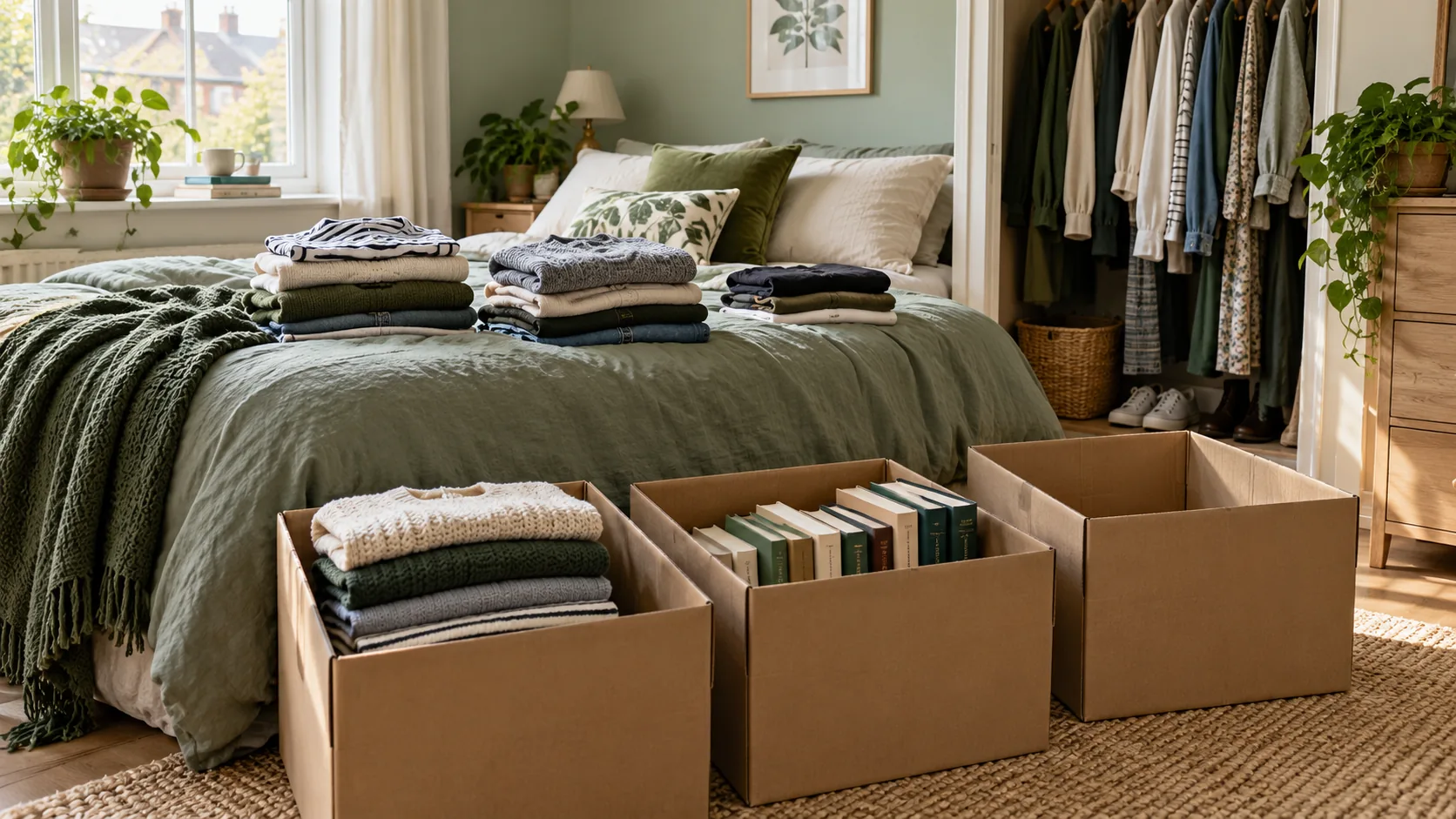
Featured image: original AI-generated illustration.
By Dr Kalpana Govindaraasan
Last updated: 20 October 2026 · Prepared during the 2026/27 tax year.
Looking for retro decluttering hacks for home? Start with simple sorting, reused boxes and a clear plan for items leaving the house. You can declutter without buying storage. Before ordering baskets or a new shelving unit, work out what needs to stay, what you can sell and what should leave your home another way.
I’m Kalpana, the scientist and mum behind MoneySavvyUK. I like a practical question: will this decision solve the problem, or create another purchase to manage?
These nine steps give you a manageable process, with clear stopping points and links to the Vinted beginner’s guide when selling is worthwhile. No promised earnings, expensive organisers or whole-house weekend required.
Retro Decluttering Hacks for Home: 9 Low-Cost UK Steps
1. Choose one small finished job
Pick a drawer, one shelf or a short section of a wardrobe. Define what finished means before emptying it: the drawer closes, the clothes you wear are easy to find, or the table has room for its intended use. A small completed space is more useful than every cupboard emptied at once.
Set a realistic time limit and leave time to put things away. If you have twenty minutes, spend the final few minutes returning keepers and moving outgoing items to their next destination. Avoid blocking the bed, a doorway or a space someone needs later.
Keep a notebook nearby for decisions that need follow-up. Write “check whether the cable belongs to the printer” rather than starting a search through another room. This keeps one uncertain object from turning a small task into a house-wide project.
2. Reuse containers you already have
Find shopping bags, delivery boxes, an empty washing basket or existing containers. Give each one a temporary role: keep elsewhere, sell, donate or dispose of appropriately. You do not need matching containers or printed labels to make the sorting work.
Keep a separate small place for uncertain items, with a date to review them. This is useful for things that need someone else’s agreement, an ownership check or a missing part. It should not become a permanent storage category for everything you find difficult.
Take a quick photograph of the space before starting if that helps you remember what changed. Keep personal papers and identifying details out of any image you might share online. The purpose is to see progress and remember the arrangement, not to make your home look like a display.
3. Keep for a specific use
For each item, ask what you use it for, where you use it and where it will live. “It might be useful” is a reason to think further, not an instruction to throw it away. A spare school uniform or a tool used occasionally can have a clear purpose.
Group duplicates before deciding. You may need more than one of something, but seeing all the chargers, reusable bags or craft supplies together makes the choice easier. Keep the quantity that fits your actual routine and available space.
Be careful with seasonal items, sentimental possessions and things belonging to other people. These often need a separate conversation or a longer decision. Start with straightforward items rather than forcing difficult family decisions into a short tidy-up.
If children’s belongings are the sticking point, the budget baby essentials guide can help you think about future purchases. Use it to reduce incoming clutter rather than as a reason to discard something still needed.
4. Choose what is worth selling
Make a small selling shortlist. Consider condition, likely demand, the work of photographing and listing, packaging and the time needed to post or arrange collection. A sale price is not the same as money left after any costs, and an advertised price is not proof an item will sell.
Start with a few straightforward items that you can describe accurately. Check comparable listings and, where available, completed sales. Avoid treating asking prices as guaranteed values. Be honest about wear, faults and missing pieces so a buyer can make an informed choice.
For clothes and other permitted items, follow the step-by-step Vinted guide. For collection-based selling, read my existing local Facebook selling experience. That article describes my experience; it does not set an earnings target for your clear-out.
5. Make selling safe and manageable
Photograph the actual item in good light. Include faults and useful measurements, and keep family photos, addresses and private documents out of the background. Make sure the item is permitted on the chosen platform and follow its current listing rules.
Keep platform sales and messages within the official process. Be cautious about unexpected links, requests for card details or claims that you must pay to release a buyer’s money. Review Vinted’s own safety guidance and the seller safety guide before handling unfamiliar requests.
Check packaging before agreeing to a posted sale. The Vinted parcel-size guide helps organise that step, but the current in-app shipping instructions govern your order. Reuse packaging only when it protects the item and meets the carrier’s requirements.
Set a listing review date. If an item has not sold, decide whether to improve the listing, change the price or use another suitable route. An unreviewed “sell later” pile is still clutter.
6. Give donations a destination
Check what a charity shop or community organisation currently accepts before making a trip. Opening hours, capacity and accepted categories vary. Keep usable donations clean and complete, and do not leave bags outside a closed shop where they can become damaged or obstruct the entrance.
For items that cannot be donated, use your council’s waste and recycling guidance. Electricals, batteries and some other materials need particular disposal routes. Do not put uncertain items into a recycling container simply because there is space.
Make the exit step concrete: put the donation trip in your diary or book the appropriate collection where available. Keep bags somewhere safe without blocking exits. If transport is the obstacle, decide on a realistic alternative before sorting several more rooms.
7. Find a home for keepers
Put remaining items where you use them. The easiest place to return something is often more valuable than the prettiest arrangement. Keep frequently used objects accessible, and avoid stacking them in a way that requires moving several other things every time.
Try existing containers before deciding you need a new one. A box inside a drawer can separate small items; an existing shelf may work better once duplicates leave. Live with the arrangement for a while and notice what repeatedly ends up outside it.
If a purchase would solve a specific remaining problem, measure first and write down exactly what you need. That is a different decision from buying a set of organisers before sorting. For any later shopping, use the fake-deal checks to keep a discount from becoming the reason to buy.
8. Give cleared space a money purpose
Record completed sales, refunds and costs separately. Only count money when the transaction has finished and funds are available. Put aside anything needed for agreed postage or other expenses before deciding what to do with the remainder.
Choose a purpose that helps your household: a bill, an emergency cushion or a planned expense. The Emergency Fund Calculator can help you see what a cash cushion might cover. You do not need to make a sale for decluttering to have been worthwhile.
If selling becomes regular buying and reselling, the tax position can differ from disposing of your own possessions. Read the Vinted tax guide and check the linked HMRC guidance for your circumstances. A platform reporting your transactions and you owing tax are separate questions.
9. Reduce what comes back in
Write a short “already have” list for categories you repeatedly buy. Check it before ordering more stationery, clothes or toiletries. Leave enough flexibility for genuine needs; the aim is fewer accidental duplicates, not a rule that makes daily life difficult.
Digital clutter can also encourage spending. Review promotional emails and shopping notifications you no longer want. If recurring purchases or memberships are adding to the problem, work through the subscription cancellation guide and use the Subscription Cost Calculator to see the ongoing commitment.
Finish by choosing the next small area and a realistic time. Do not buy supplies as a reward for finishing unless they meet an actual need. A repeatable process should leave you with less to manage, including fewer purchases to pay for.
What I’d do first
I’d clear one drawer with containers already at home, list only a few suitable items and arrange the donation exit before starting another space. I’d judge the result by whether daily life is easier, rather than how much money the clear-out produces.
Frequently asked questions
Do I need storage boxes to declutter?
Often you can begin with existing bags, boxes and drawers. Sort first, return the items you are keeping and test the arrangement. Buy storage only if a clear remaining problem needs it, after checking the measurements and the quantity you actually need to store.
Should I sell everything I no longer need?
No. Selling takes time and some items will not be suitable or worthwhile. Choose items in acceptable condition with realistic demand, then consider donation or appropriate recycling for the rest. Never describe a sale as certain income before the transaction is complete.
What if my family wants to keep things?
Keep other people’s belongings separate and agree what you can decide together. Begin with your own straightforward items. Sentimental possessions and shared household equipment usually need more discussion than duplicates in your own drawer, so give those decisions their own time.
How do I stop a selling pile building up?
Limit the number of active listings, give them a review date and decide the next route in advance. Keep packaging and collection arrangements manageable. If the likely return no longer justifies the work, choosing a suitable donation route can be a sensible finish.
retro decluttering hacks for home: summary
- Finish one manageable space.
- Sort before buying organisers.
- Sell selectively and follow platform safety rules.
- Arrange a real exit for donations and recycling.
- Review incoming purchases to keep the space usable.
Which small area would make the biggest difference to your week?
Sources and further checks
- Vinted: safety and secure transactions
- GOV.UK: selling goods or services through online platforms
- GOV.UK: find your local council for recycling guidance
Sources checked on 20 October 2026. Follow the linked official pages for current rules and charges.
I’m not a financial adviser; this is general information. Read the financial disclaimer.