

Last updated: October 2026
Halloween on a budget UK starts with a plan you can afford. Halloween can creep up and quietly cost a fortune: a new costume for every child, three bags of sweets “just in case”, a pumpkin that ends up in the bin. It doesn’t have to.
Here’s how to have a properly fun family Halloween with a £20 example budget, with costumes from what you already own, a sweets plan, and free things to do. Use the simple planning checklist below to keep track.
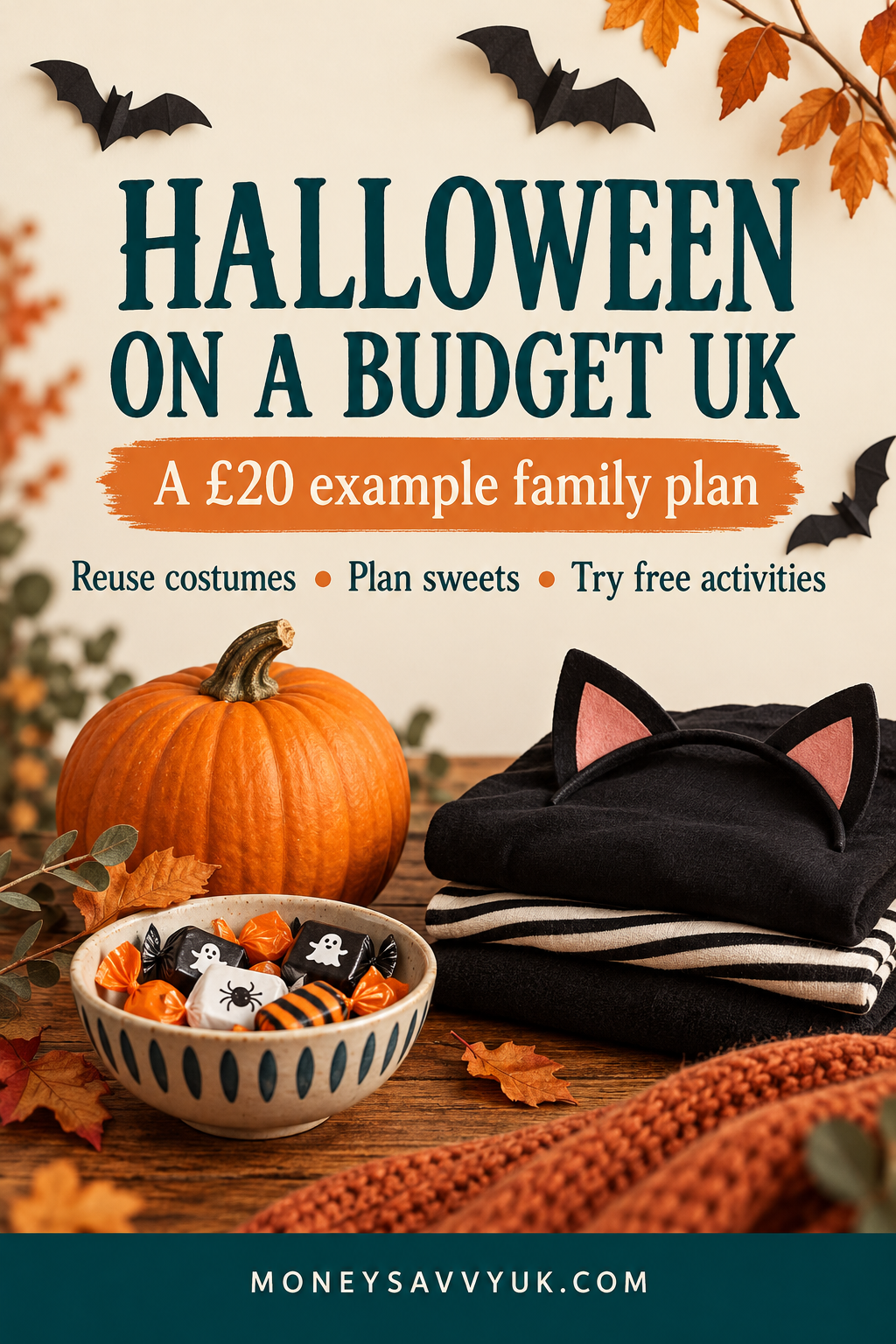
Halloween on a budget UK: set one total first
Pick one number for the whole of Halloween before you go near the shops. Here is a £20 planning example if you already have clothes and some food at home. These are spending caps, not verified shop prices; adjust them to your family and local prices:
- Costumes: £4 (mostly from home)
- Sweets for trick-or-treaters: £6
- Pumpkin and decorations: £5
- Party food or a treat night in: £5
Write the number down. It’s much easier to say no to a £15 costume when you can see it’s most of the budget.
Recommended reading: How to build your first £1,000 buffer
2. Make costumes from what you already have
Choose the costume with your child before buying anything. A few ideas that need almost nothing:
- Ghost: white clothes with a ghost face on the front; keep faces uncovered and avoid loose trailing fabric.
- Skeleton: black leggings and top with bones drawn in white fabric paint or tape.
- Cat, bat or spider: black clothes, paper ears or wings, face paint whiskers.
- Zombie: old clothes, a few rips and some grey face paint.
- Witch or wizard: a dark dressing gown and a paper hat.
- Pumpkin: an orange top with a black paper face taped on.
Other options: swap costumes with friends, ask in your local Facebook group, or look on Vinted, where last year’s costumes are often listed in October.
Recommended reading: How to sell on Vinted UK. Sell outgrown costumes in early October, when people are searching for them.
3. Plan the trick-or-treat sweets
- Decide how many children you expect. If you’ve lived there a year or more, think back to last year. If you’re new, ask a neighbour.
- Buy one big multipack, not several small bags. Compare the price per 100g on the shelf label, not the price on the front of the bag.
- Compare prices before the last-minute rush. Reductions are not guaranteed, so choose a pack within your cap rather than waiting for a sale.
- Mix in non-sweet treats such as stickers or glow sticks, if appropriate for children’s ages and affordable within the total.
- Not taking part? A “no sweets here, sorry” sign on the door is perfectly fine.
Recommended reading: The supermarket downshift challenge
4. Get the pumpkin without the waste
- Supermarket carving pumpkins are usually far cheaper than pumpkin-patch ones. Save the patch for a day out if you want one.
- Use edible pumpkins safely. Check that yours is intended to be eaten. Set aside clean flesh before carving and refrigerate it promptly; do not cook a carved pumpkin that has been displayed outside or held a candle.
- For very small children, draw a face on with a marker instead of carving. Use age-appropriate materials and keep adult supervision for any cutting; do not assume a decorated pumpkin remains suitable to eat.
5. Free and cheap Halloween things to do in the UK
- Library events: many libraries run free Halloween crafts and spooky storytimes in half term. Check your council’s library page.
- A spooky walk: a torch-lit walk round the block or a local park, spotting decorated houses.
- Home-made decorations: paper bats, toilet-roll mummies, cotton-wool cobwebs.
- A Halloween film night with popcorn and a blanket fort.
- A pumpkin-carving evening with soup and roasted seeds after.
- A paper treasure hunt with clues around the house. Keep any small prizes suitable for the ages taking part.
Paid trails and farm events can be lovely but add up quickly. Pick one, if any, and count it in your budget.
Recommended reading: Where kids eat free or for £1 in the UK, handy for half term.
6. A cheap Halloween party at home
- Keep the guest list small and make it a “come in your costume from home” party.
- Spooky food from cupboard basics: banana ghosts, satsuma pumpkins with a celery stalk, “mummy” sausage rolls wrapped in pastry strips.
- Games that cost nothing: musical statues, sleeping ghosts, a treasure hunt.
- Ask each family to bring one plate of food.
7. Shop 1 November for next year
The day after Halloween, leftover costumes, decorations and sweets are often reduced. Buy only reusable items you have space to store. Children’s sizes and interests can change, and food needs to stay within its date. Record the cost when you spend it, even if the item is for next year.
Recommended reading: UK birthday freebies and discounts
Your Halloween planning checklist
Write down your total, what you already own, the costume plan, your sweets cap and one free activity. Check each purchase against the remaining budget. Download the free two-page Halloween plan (PDF) and fill it in with your own budget.
Frequently asked questions
How much should I spend on Halloween?
There’s no right amount. Pick a number you can afford from this month’s money, without borrowing, and split it between costumes, sweets, the pumpkin and food. A £20 plan may work when you already own the basics, but it will not suit every family.
What’s the cheapest Halloween costume for kids?
One made from clothes you already own: a ghost from an old sheet, a cat in black clothes with paper ears, or a skeleton with white tape on black clothes.
How many sweets do I need for trick-or-treaters?
Go by last year if you can, plus a few extra. One or two small sweets per child is plenty, and you can switch the porch light off when they’ve gone.
When are Halloween costumes cheapest?
Usually just after Halloween, when shops clear their stock. Compare second-hand listings with postage included; there is no guaranteed cheapest week.
Summary
- Set one Halloween budget first and use £20 only as an example.
- Make costumes from what you have, or swap and buy second-hand.
- Buy one big bag of sweets close to the day.
- Avoid wasting edible pumpkin, following food safety guidance.
- Do free things: library events, spooky walks, a film night.
What’s your family’s favourite cheap Halloween idea? Tell me in the comments.
I’m not a financial adviser; this is general information. Prices vary by shop and area.
What I’d do first this weekend
Before visiting a shop, spend ten minutes opening the dressing-up box and food cupboard. Let each child choose one idea that works with what is already there. Write a short list of missing items and divide the budget between the parts you actually want. You can skip a pumpkin, hosting or handing out sweets if those are not priorities for your household.
In the example above, £4 for costumes, £6 for sweets, £5 for a pumpkin and decorations and £5 for food totals £20. If the pumpkin you find would push that over the cap, make paper window decorations instead. If costumes cost nothing, you can keep that £4 unspent. A budget is a maximum, not a target you have to use up.
Think about the full cost of a paid outing. Add entry, transport, parking, food and any booking charge before deciding whether it is good value. Compare it with a free half-term activity or a walk to see decorated houses. Ask your local library about dates and booking rather than assuming every event is free or has space.
Make a safe costume plan too. Keep outfits away from flames, use battery lights in decorations and avoid anything that blocks vision or trails along the ground. If buying a children’s costume, check age suitability and the product’s safety information. The Office for Product Safety and Standards costume guidance explains why flame safety matters. Adults should supervise carving and evening activities.
For trick-or-treating, agree the route, who is accompanying the children and when you will come home. Check packaged sweets for allergy information before eating them. Keep a few suitable treats back for your own film night if you want to, but put them inside the budget instead of buying a second unplanned basket.
If you need a costume piece you will use again, see Halloween pieces to wear again. For low-cost atmosphere, start with the ideas in small-home Halloween decorating and choose what you can recreate from what you already have. The budget calculator can help you check the seasonal spending fits alongside the rest of the month.
Planning for another celebration? The birthday freebies guide and children’s birthday rewards guide explain the catches before you spend. My Sinking Funds & Savings Pots tracker is a paid option for spreading seasonal costs over the year; a plain notebook works too.
A Halloween on a budget UK plan you can repeat
Choose one total, reuse the basics and spend on the parts your household values. Keep the plan flexible when prices differ. A costume from home, a free activity and a simple treat night can still make the evening feel special without borrowing for it.
Written by Dr Kalpana Govindaraasan, MoneySavvyUK founder, UK mum, PhD scientist and former science teacher. General money-saving information; example spending caps are not shop prices.