

Last updated: 17 November 2026. General information, not financial advice.
A £3.50 meal deal. A £2.80 coffee. A £6.99 “quick” online order. You tap your card or phone and it barely registers. By the end of the month you know you’ve spent too much, but you couldn’t say where it went, because none of it ever felt like real money.
We saved our £36,000 house deposit on one salary, and I can promise you it wasn’t one big win. It was hundreds of small ones. That’s what I love about cash stuffing challenges: they turn small savings into something you can see, touch and colour in, which makes it much easier to keep going.
The short answer: a cash stuffing challenge means saving physical cash into envelopes or a binder towards a target, such as the 100 envelope challenge (£5,050) or a mini £100 challenge. Pick one that fits your budget, track it on a printable, and pay the cash into a savings account regularly so it’s safe.
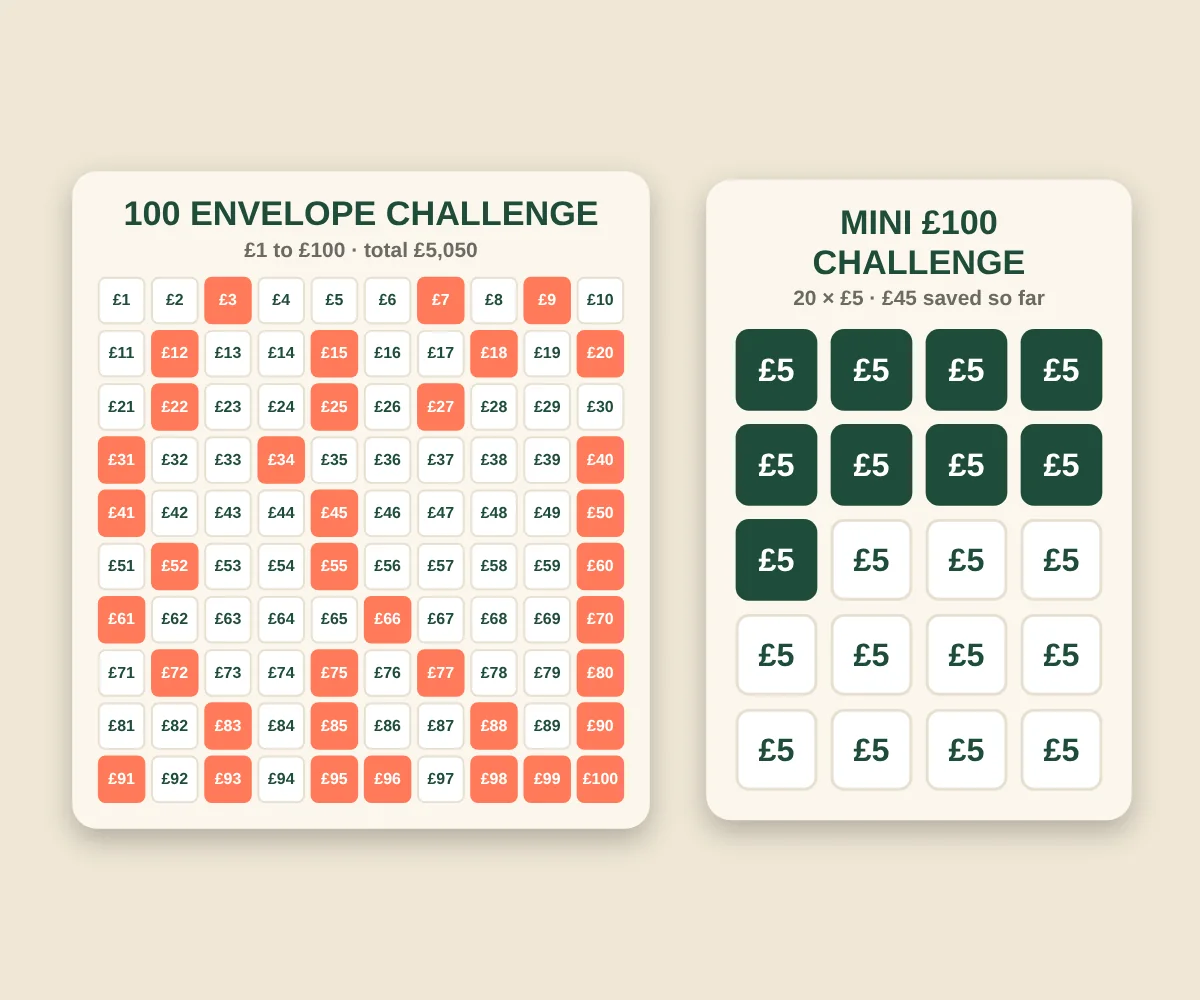
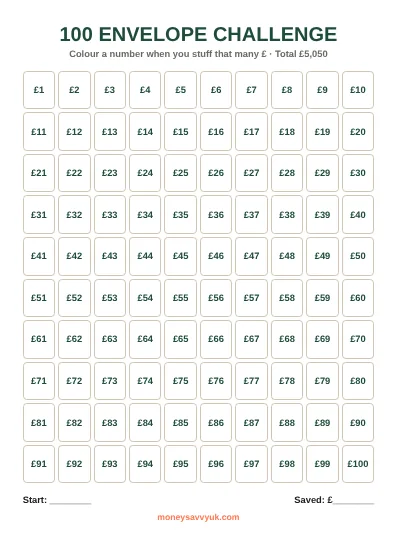
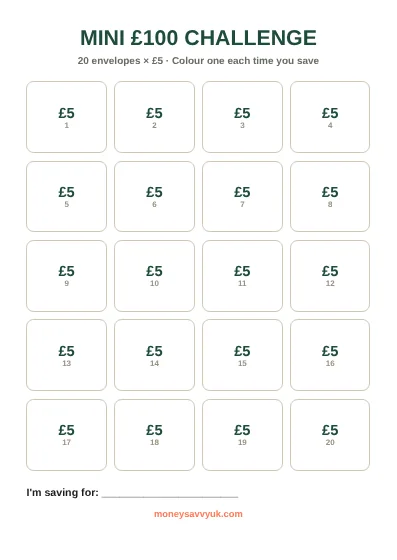
Free cash stuffing printables (A6)
Both trackers are A6, so they fit most cash stuffing binders. You can also print them on A4 and trim.
Two more free printables from my library: the £500 Savings Jar Challenge and the Save £1,000 in 2027 Challenge.
Cash stuffing challenges at a glance
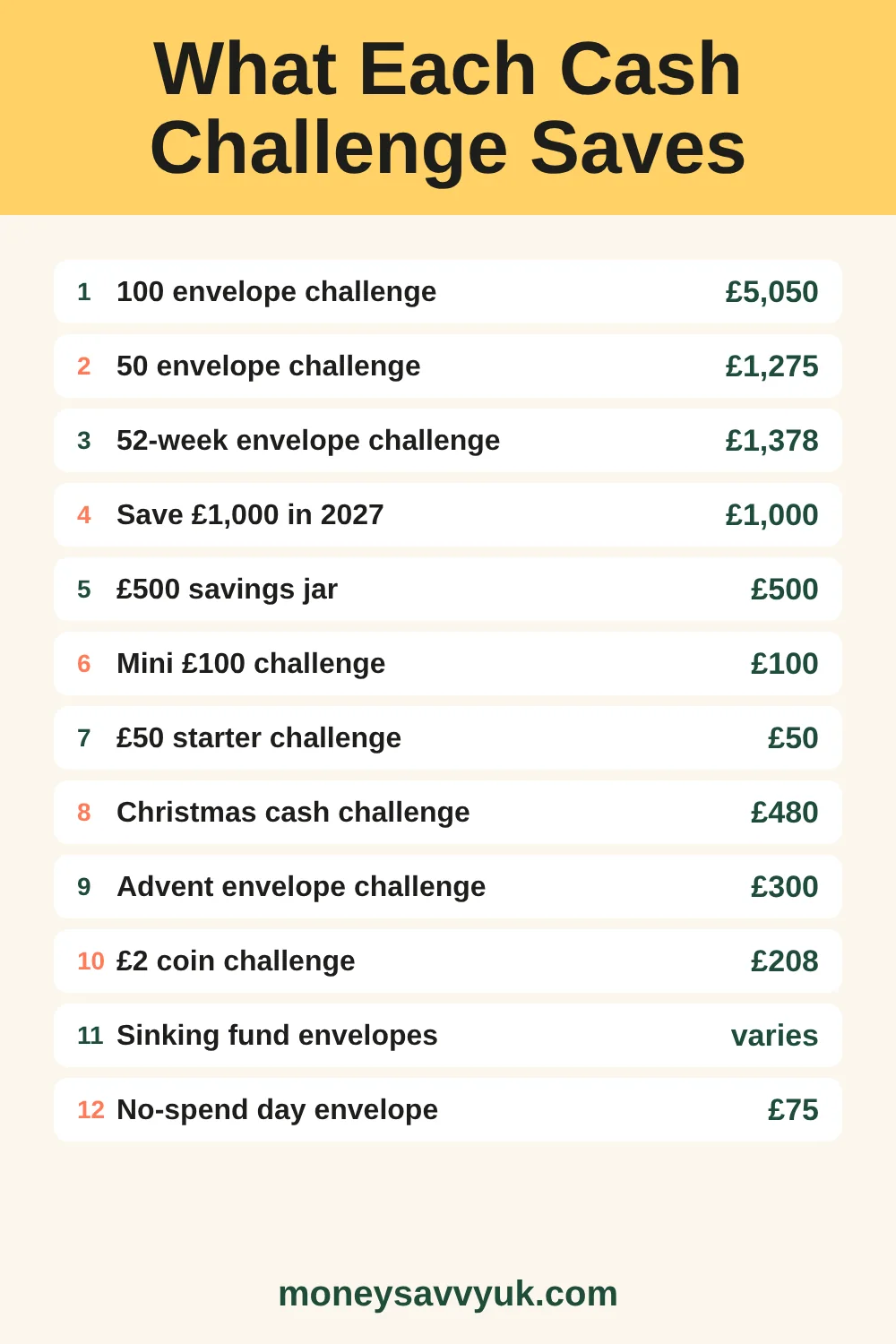
| Challenge | Total saved | Best for |
|---|---|---|
| 1. 100 envelope challenge | £5,050 | A big goal, like a house deposit or car |
| 2. 50 envelope challenge | £1,275 | Half the effort of the 100 |
| 3. 52-week envelope challenge | £1,378 | Saving weekly through 2027 |
| 4. Save £1,000 in 2027 | £1,000 | A first emergency fund |
| 5. £500 savings jar | £500 | Holidays or Christmas |
| 6. Mini £100 challenge | £100 | Tight budgets, beginners |
| 7. £50 starter challenge | £50 | Very low income, children |
| 8. Christmas cash challenge | £480 | Christmas 2027 without debt |
| 9. Advent envelope challenge | £300 | December, for January bills |
| 10. £2 coin challenge | £208 | Spare change |
| 11. Sinking fund envelopes | Varies | Predictable bills |
| 12. No-spend day envelope | £75 a month | Pairing with a no-spend challenge |
12 cash stuffing challenges for UK savers
1. The 100 envelope challenge (save £5,050)
How it works: number 100 envelopes from £1 to £100. Each time you save, pick an envelope at random and put that amount in. Fill all 100 and you’ll have £5,050.
Make it realistic: over a year, that’s about £97 a week, so it suits two incomes or a specific big goal. Over 100 days it’s around £50 a day, which is only realistic for a few households.
2. The 50 envelope challenge (save £1,275)
How it works: the same idea with 50 envelopes numbered £1 to £50. Total: £1,275, or about £24.50 a week over a year.
3. The 52-week envelope challenge (save £1,378)
How it works: one envelope per week, from £1 in week 1 to £52 in week 52. Total: £1,378. Doing it in reverse (£52 first) avoids the most expensive weeks landing in November and December. My savings challenges guide has the full maths.
4. Save £1,000 in 2027
How it works: colour in squares of different amounts until you reach £1,000, a great first emergency fund. Download my free Save £1,000 in 2027 printable.
5. The £500 savings jar
How it works: a smaller target for a holiday, Christmas or car repairs. Use my free £500 Savings Jar Challenge and colour in as you go.
6. The mini £100 challenge
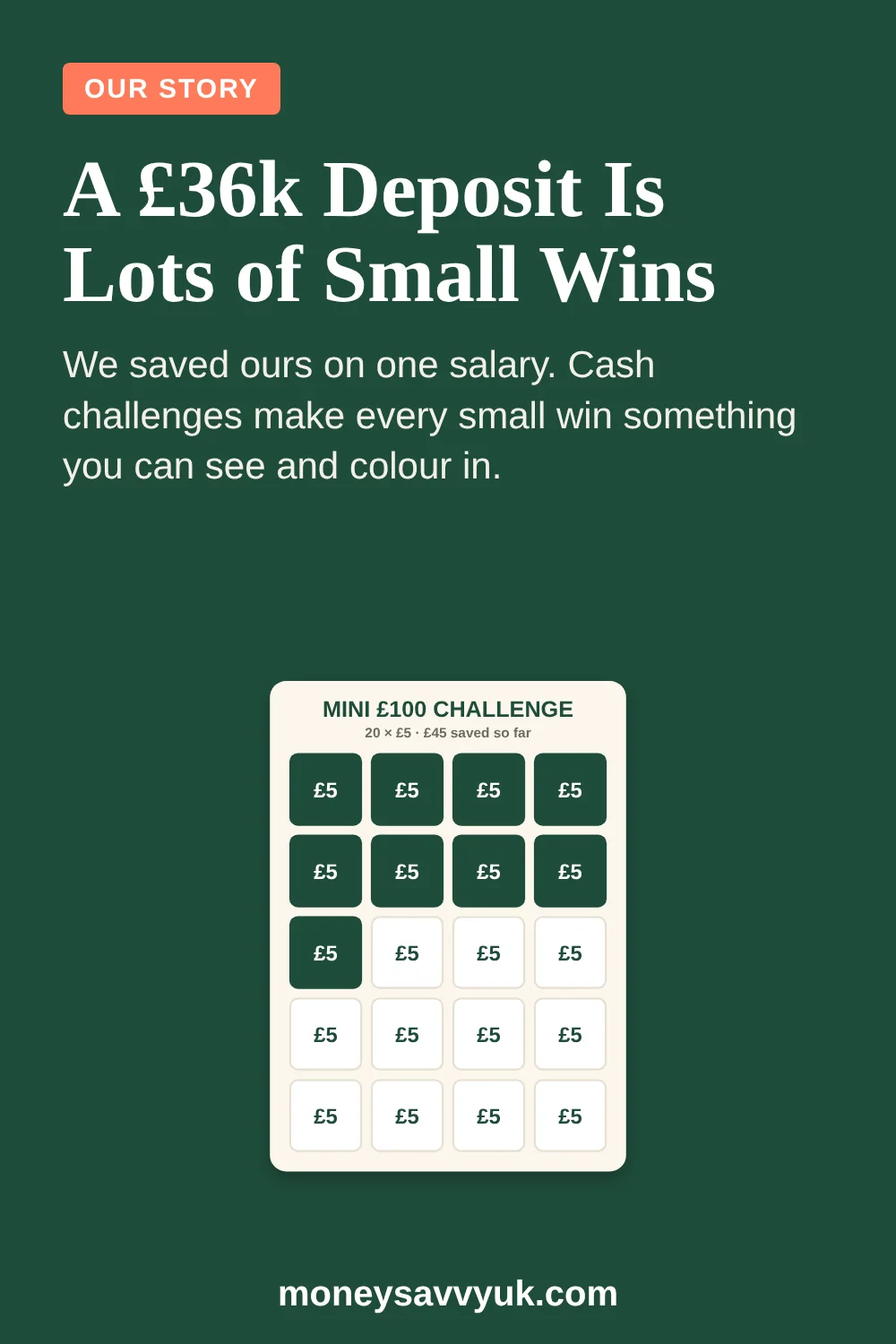
How it works: 20 envelopes of £5 each. Fill one whenever you can spare £5. Total: £100.
Worked example: £5 a week gets you there in 20 weeks, or about five months. Download the free Mini £100 Challenge tracker.
7. The £50 starter challenge
How it works: 10 envelopes of £5. It’s ideal if money is very tight, or as a first challenge for children. Finishing a small challenge builds the habit, and that matters more than the amount.
8. The Christmas cash challenge (save £480)
How it works: put £10 in a Christmas envelope every week, starting Monday 4 January 2027. After 48 weeks, in early December, you’ll have £480 for Christmas 2027 without touching a credit card.
9. The advent envelope challenge (save £300)
How it works: from 1 to 24 December, save £1 on the 1st, £2 on the 2nd and so on up to £24. Total: £300. It’s a lovely way to start January with a cushion for the long month.
10. The £2 coin challenge (save £208)
How it works: every £2 coin you get in change goes into a jar. If you save two a week, that’s £208 over a year.
11. Sinking fund envelopes
How it works: label envelopes for predictable costs like Christmas, birthdays, the MOT and school uniform, and stuff each one on payday. My 25 sinking funds categories guide shows how much to put in each.
12. The no-spend day envelope
How it works: every day you spend nothing on non-essentials, put £5 in the envelope. Fifteen no-spend days in a month adds up to £75. It pairs perfectly with a No Spend January.
How to start cash stuffing in 5 steps (UK)
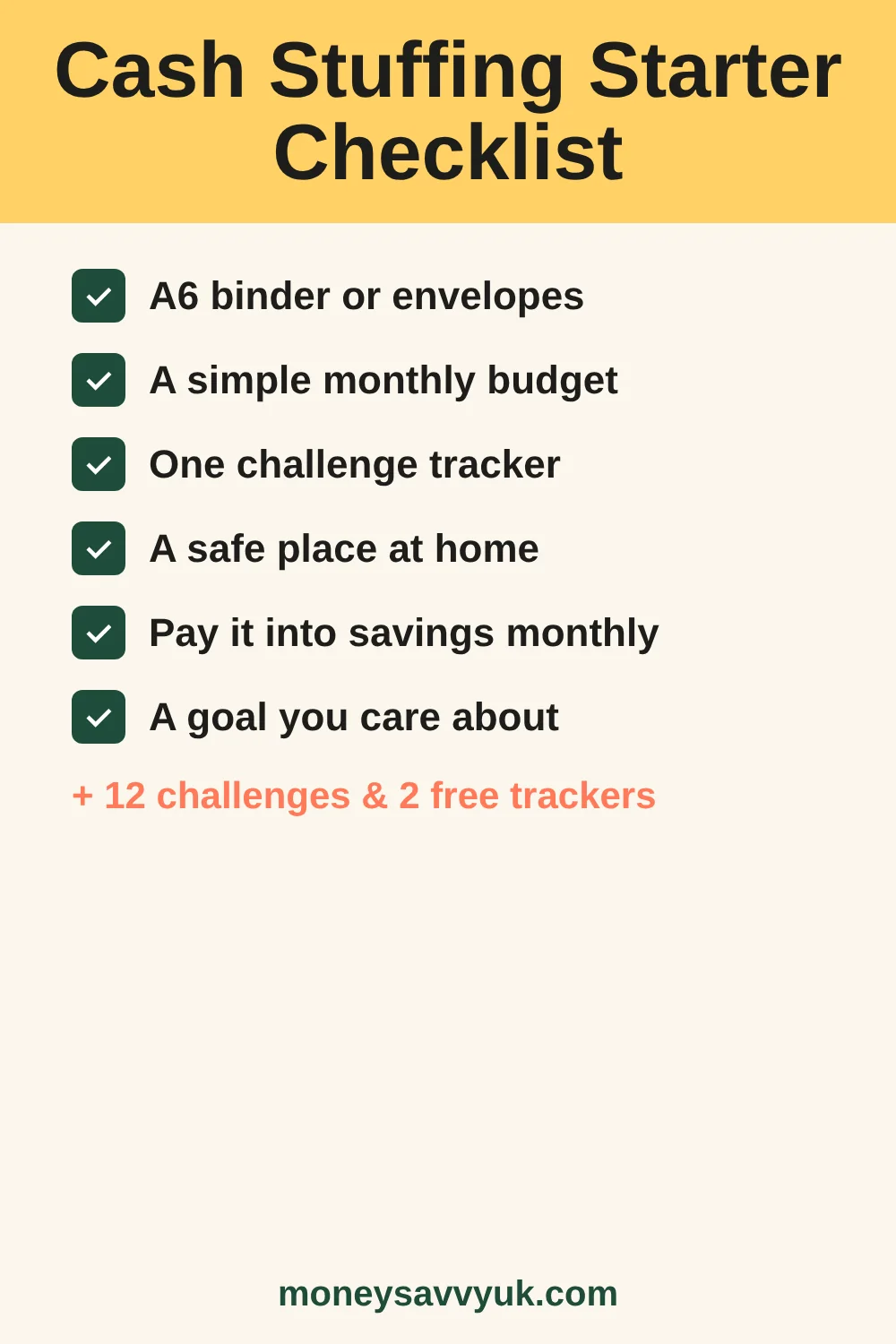
- Work out your monthly take-home pay. Use your payslip, not your salary. If your income changes, use your lowest normal month. My budget planner guide walks you through it.
- Keep bills on direct debit. Rent or mortgage, council tax, energy and phone contracts should stay in your bank account. Cash stuffing works best for the flexible spending: food, fuel, fun, gifts and savings challenges.
- Choose your envelopes. Start with three to five: for example, food shop, petrol, kids, fun money and one savings challenge. Too many envelopes is the quickest way to give up.
- Withdraw cash on payday. Use a free-to-use cash machine (most UK ATMs are free, but some convenience-store machines charge) and stuff each envelope straight away, before the money gets spent.
- Track it and bank the savings. Colour in your tracker each time you save. At the end of the month, move any savings cash into a savings account, and roll leftover spending money into a sinking fund or your challenge.
Cash stuffing vs digital savings pots
| Cash stuffing | Digital pots | |
|---|---|---|
| Motivation | Very visual: you can see and count it | Visual in the app, but easier to ignore |
| Overspending | Hard: when the envelope’s empty, you stop | Easy to move money back |
| Interest | None while it’s at home | Earns interest |
| Safety | Limited by home insurance cash limits | FSCS protected up to £120,000 |
| Best for | Spending categories and short challenges | Long-term savings and sinking funds |
Many families use both: cash envelopes for the food shop and fun money, and digital pots for anything bigger. That’s how you get the motivation of cash without the risk.
Common cash stuffing mistakes to avoid
- Picking a challenge that’s too big: the 100 envelope challenge is £5,050. If that’s more than you can save, it will make you feel like you’ve failed. Start smaller.
- Keeping too much cash at home: bank your savings at least monthly.
- “Borrowing” from envelopes: if you raid the savings envelope for the food shop, your food budget is too small. Adjust the budget rather than the habit.
- Forgetting annual bills: the MOT, TV Licence and Christmas still need planning. Add sinking fund envelopes for them.
- Not tracking: without a tracker, it’s easy to lose count. Colour in every envelope you fill.
Is cash stuffing safe? UK tips
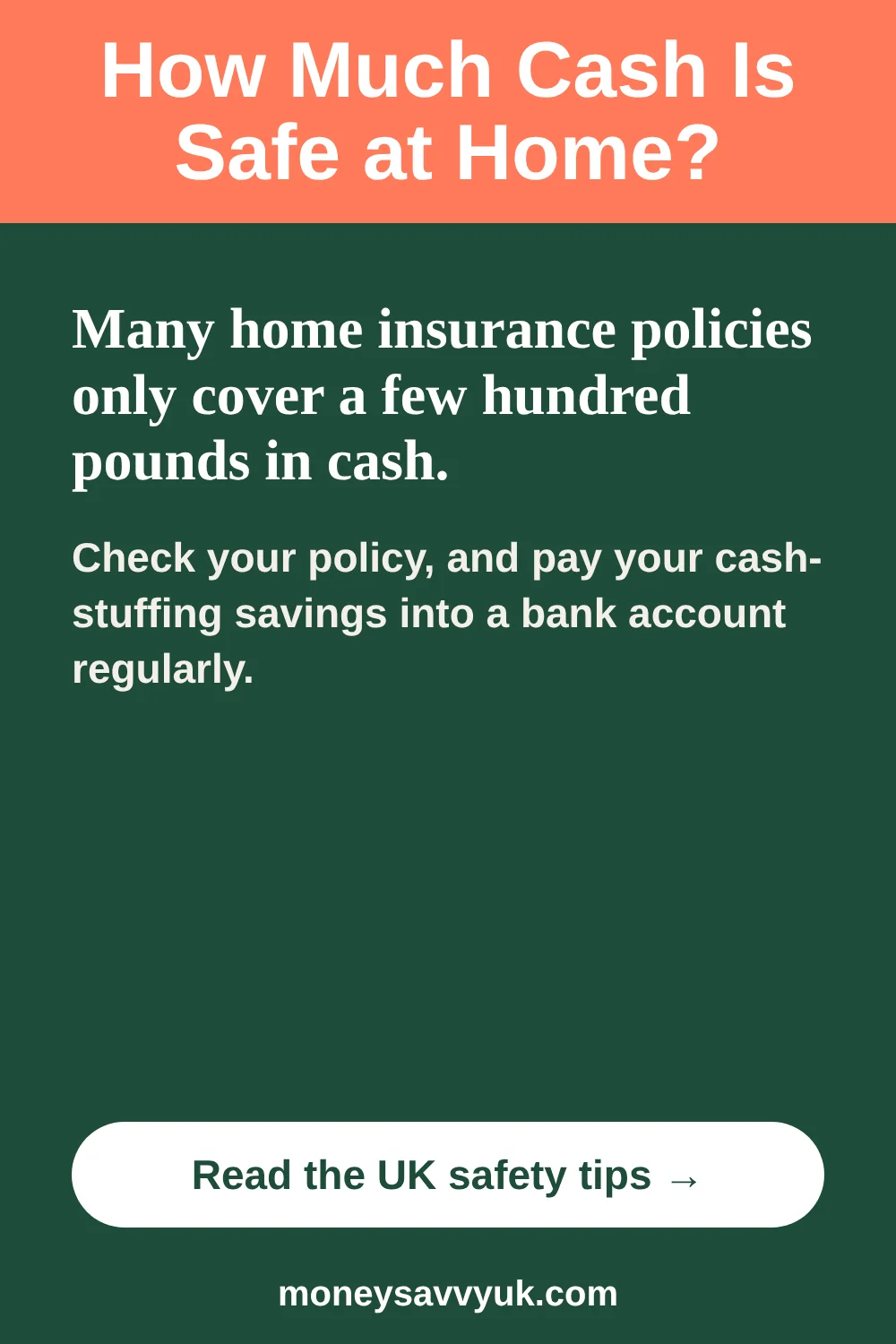
- Check your home insurance: many contents policies only cover a limited amount of cash, often a few hundred pounds. Check your policy wording.
- Bank it regularly: once an envelope is full, or at least monthly, pay the cash into a savings account. Your money then earns interest and is protected by the Financial Services Compensation Scheme (FSCS) up to £120,000 per person, per banking licence.
- Keep it out of sight: don’t leave a full binder on display, and don’t post photos showing your address or large amounts of cash.
- Prefer digital? Use named savings pots in your banking app and the same printable trackers. You get the visual motivation without holding cash.
See my guide to the best UK savings accounts for somewhere to put your cash. For free, impartial budgeting help, the government-backed MoneyHelper budgeting guides are also worth a look.
Want a full budget and savings planner?
ADHD Budget Planner UK (payday budget): payday budget pages, a savings tracker, debt snowball and a No Spend January challenge. View on Etsy →
2027 Budget Planner UK (printable & digital): savings pots, bill tracker and spending log in £. View on Etsy →
These are my own planners, sold in my MoneySavvyUK Etsy shop.
Save these cash stuffing pins
Pin one now so you can find the challenges and free trackers again.
Cash stuffing challenges: people also ask
What is cash stuffing?
Cash stuffing is a budgeting and saving method where you put physical cash into labelled envelopes or a binder, either for spending categories like food or for savings goals. Seeing the cash and colouring in a tracker makes progress feel real, which helps many people stick with it.
How much does the 100 envelope challenge save in the UK?
The 100 envelope challenge saves £5,050 in total, because you fill envelopes numbered £1 to £100. Spread over a year, that’s about £97 a week. If that’s too much, try the 50 envelope challenge (£1,275) or a mini £100 challenge instead.
What’s a good cash stuffing challenge for a low income?
Start small with a £50 or £100 challenge using £5 envelopes, or save every £2 coin you get in change. Finishing a small challenge builds the habit. You can always move on to the 52-week or 50 envelope challenge once your budget has more room.
Is it safe to keep savings in cash at home?
Keeping a small amount is fine, but many home insurance policies only cover a limited amount of cash. Pay your savings into a bank account regularly, where they earn interest and are protected by the FSCS up to £120,000 per person, per banking licence.
Do cash stuffing envelopes work for the food shop?
Yes. The food shop is one of the best categories for cash stuffing. Withdraw your weekly food budget in cash, take only that envelope to the supermarket, and stop when it’s empty. Keep a small buffer for midweek milk and bread so you don’t need to use a card.
What size binder do I need for cash stuffing?
A6 is the most popular size in the UK, because A6 binders hold UK banknotes well and fit in a handbag. That’s why my free 100 Envelope Challenge and Mini £100 Challenge trackers are A6, though you can print them on A4 and trim.
Summary
- Pick one cash stuffing challenge that fits your budget: from £50 for beginners to £5,050 for the 100 envelope challenge.
- Use a free A6 tracker and colour in each envelope as you save.
- Pay the cash into a savings account regularly to keep it safe and earning interest.
Next step: download the free trackers above, or grab my free 7-Day Financial Reset Kit to see how much you can afford to save each payday.
Examples are illustrative. Check your own insurance policy and savings account terms. This article is general information, not financial advice.