

Last updated: 6 November 2026
Here’s how to budget for Christmas without debt: reserve money for essential bills until your next normal payday, subtract what you’ve already saved from your Christmas target, and divide the rest by the paydays before you need to spend it. If the amount is too high, lower the target.
In Good Salary, Empty Account, I talk about a budgeting habit that applies especially well to Christmas. The date is predictable, but the payments come in at different times. The train ticket might need paying for this week, even if the Christmas dinner shop can wait until December.
Set a Christmas budget you can afford this November
1. Protect bills until your first normal payday after Christmas
Open your banking app and list the payments due before your first normal payday after Christmas. Include rent or mortgage, Council Tax, energy, everyday groceries, travel and existing repayments. If your employer pays you early in December, mark the January payday too, so you can see how long the money needs to last.
If your bills vary in winter, use the amount your supplier is due to take and check your latest statement. My monthly budgeting guide and UK payday routine can help you map the gap.
Free worksheet: Grab my 7-Day Financial Reset Kit to check regular spending before you decide how much you can put aside.
2. Give gifts, food and travel their own limits
Start with your list, then add the extras that are easy to miss: postage, wrapping, school events, work meals and petrol or train fares. Count only the extra festive food if your normal groceries are already covered. A £95 shop in a week you’d normally spend £65 adds £30 to the Christmas pot.
If you need to cut back, agree a price limit before anyone shops. You could suggest presents for children only, a family Secret Santa, or getting together without exchanging gifts. If you have £0 left after essentials, that’s your spending limit. StepChange’s free budgeting help is a starting point if you’re already struggling to cover bills.
3. Divide what’s left by the paydays you can actually use
Per-payday target = (Christmas budget − amount already saved) ÷ usable paydays. A payday is usable if it lands before the spending deadline. If a £50 train ticket is due before the second payday, cover it from the money available now or adjust the trip.
| Budget check | Amount |
|---|---|
| Original Christmas list | £360 |
| Already saved | £60 |
| Needed each payday for the original plan | £150 |
| Actually available each payday | £100 |
| New affordable Christmas budget | £260 |
| Amount to trim from the list | £100 |
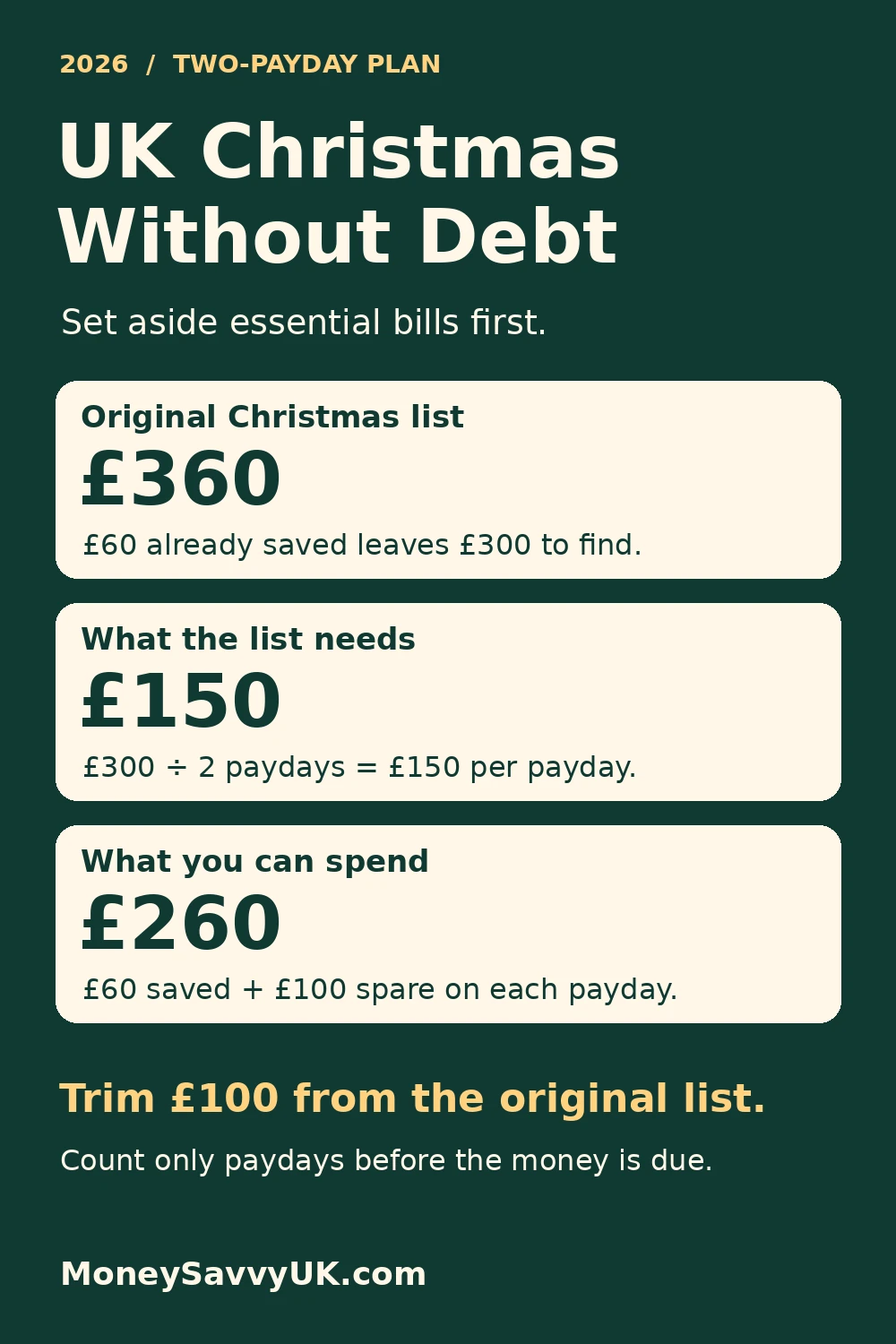
One way to divide the £260 is £100 for gifts, £80 for festive food, £50 for travel and £30 for extras. If you have one payday left with £100 spare, the same £60 starting pot gives you a £160 budget.
Keep the money in a named pot you can access before the bills are due. Use my sinking funds guide to set it up or record each category in my Sinking Funds & Savings Pots Tracker.
4. Check the checkout price and write down existing instalments
Compare the full price with delivery before shopping the sales. If an order costs £45 with a possible £5 cashback, leave £45 in the shopping budget and count the cashback once it’s paid. My Christmas cashback stacking guide explains how to check whether rewards combine.
Three £30 instalments still cost £90. If you’ve already used Buy Now, Pay Later, enter each instalment on the date it’s due before working out how much you have left to spend. If you’re also preparing to borrow for a home, see my mortgage paperwork guide for how to record existing commitments.
What I’d do first
Write down your next two paydays and the date of the first Christmas cost. If there’s spare cash after bills, move it into a separate pot and give every purchase a limit. In January, review the actual total with my January money reset guide and use it to set next year’s target.
Christmas budgeting key takeaways
- Set essential bills aside until the next normal payday.
- Subtract what you’ve already saved and count paydays before the money is needed.
- If the maths leaves a gap, trim the list before shopping.
- Budget the checkout price in full and record any instalments by due date.
Christmas budgeting FAQs
How much should I save each week for Christmas?
Subtract what you’ve already saved from your spending target, then divide by the number of weekly paydays before you need the money. If £300 remains and there are six usable paydays, set aside £50 per week if essentials are covered.
How do I budget for Christmas with one payday left?
Work out what that pay needs to cover until you’re paid again. Add any spare cash to your existing Christmas savings and use that total as your spending cap.
Should I use my emergency fund for Christmas?
Use a separate sinking fund for planned costs like gifts or hosting. Keep your emergency fund for urgent, unexpected costs such as a boiler breakdown.
When should I start saving for next Christmas?
Once you know what this Christmas cost, set a target and pick the date you want the money ready. A £360 target over 12 monthly paydays needs £30 each payday, or £36 if you want it in 10.
Sources
- MoneyHelper: Saving money for Christmas
- MoneyHelper: Sinking funds explained
- StepChange: How to manage your budget
I’m not a financial adviser. This guide shares general budgeting information and does not constitute regulated financial advice.