

Check your card’s overseas charges, then check which currency the payment terminal is asking you to accept. Comparing UK bank cards for travel involves more than choosing an account advertised as fee-free.
A bank may charge nothing for a purchase while an ATM adds its own withdrawal fee. A card machine may offer to convert the bill into pounds using a different rate. And the cash allowance you remember may depend on your account or destination.
I would prepare a simple payment plan before departure: a suitable main card, an independent backup and enough cash for the places that need it.
Last updated: 30 October 2026. This is a factual comparison of selected debit-account features, not a recommendation to open an account. Example exchange rates, charges and spending amounts are illustrative unless explicitly sourced.
UK bank cards for travel: understand the three costs
1. Separate the exchange rate from the fees
When paying abroad, three different parties can affect the cost:
- Your bank: its exchange-rate method and any purchase or withdrawal charge.
- The ATM operator: a separate charge for using its machine.
- The merchant or ATM conversion service: a rate offered if you choose to pay in pounds.
A card described as having no overseas purchase fee does not necessarily remove the other two.
Check your actual account’s current tariff. Product names, paid plans and account conditions matter. Another customer’s statement is not proof of what your account will charge.
2. Compare cards against the holiday you are taking
List the countries, expected card spending, likely cash needs and any hotel or car-hire deposit. Then compare the features you actually need.
For a mostly card-based city break, purchase charges may dominate. For a longer trip involving cash-only businesses, withdrawal allowances may matter more.
Use our budget calculator to keep holiday spending within the household plan. A different payment method does not make an unaffordable purchase affordable.
Monzo, Starling and Chase: what the official pages say
3. Read this comparison as a dated snapshot
The following information was checked on 30 October 2026. It concerns the stated personal debit-account features, not every product sold by these banks.
| Account | Overseas purchases | Cash point to check |
|---|---|---|
| Monzo | Published guidance says card spending uses Mastercard’s rate without a Monzo spending fee | Allowance depends on account use, plan and whether the withdrawal is inside the EEA |
| Starling personal account | Published guidance says Mastercard’s rate with no Starling overseas transaction fee | Published daily cash-withdrawal limit: £300 equivalent; ATM-owner charges may still apply |
| Chase current account | Published guidance says no Chase overseas card fee and Mastercard’s rate for local-currency purchases | Published cash limits: £500 daily and £1,500 abroad per calendar month |
This is not a ranking of every UK travel card. It does not compare interest, switching incentives or investment products. Check the account’s overall suitability and current conditions before applying.
4. Monzo: do not assume every customer has the same cash allowance
Monzo’s linked guidance distinguishes customers using it as their main bank from other customers. For a free account not treated as the main bank, it lists £400 fee-free in the UK and EEA over its 30-day allowance period, then 3%; outside the EEA, it lists £200, then 3%.
For qualifying main-bank customers, it lists unlimited fee-free UK/EEA withdrawals, with the stated outside-EEA allowance still relevant. Paid plans have different allowances.
Check the app’s Fees and allowances information, including previous withdrawals and any shared personal/joint-account allowance. Do not confuse a 30-day allowance with a calendar month.
5. Starling: separate the bank’s fee from the machine’s fee
Starling’s travel page says you do not need to tell it you are travelling. It lists no Starling overseas purchase or withdrawal fee and a £300-equivalent daily cash limit.
An ATM may impose a lower transaction limit or a separate charge. “No fee from the bank” does not guarantee a free withdrawal at every machine.
6. Chase: check both limits and the card controls
Chase’s travel guidance lists £500 daily cash withdrawals and a further £1,500 abroad per calendar month from the current account.
It says no travel notification is needed, but overseas payments must be enabled in the app’s card controls. It also warns that local ATM operators may charge.
The page discusses other Chase products too. Do not apply current-account withdrawal conditions to a credit card or assume cash borrowing works the same way.
Pay in pounds or local currency?
7. Understand what the terminal is offering
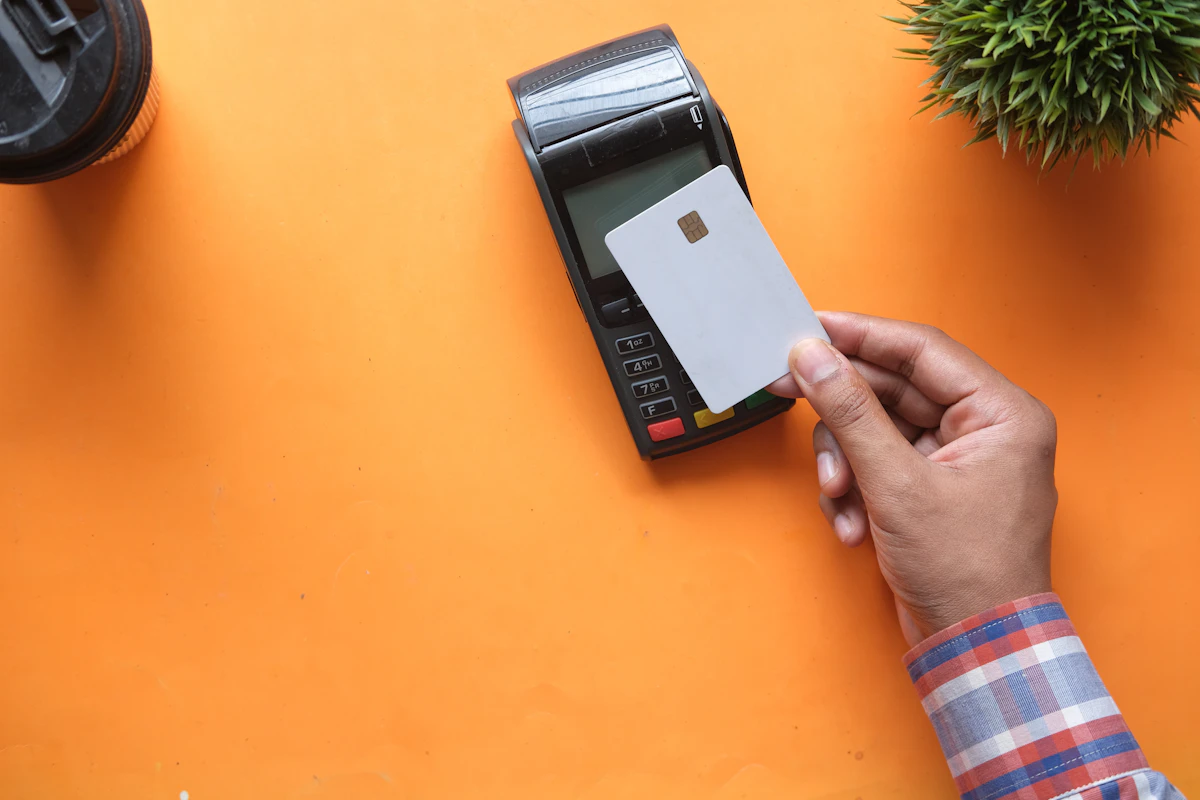
A card machine may offer the bill in euros or pounds. The pounds option can be a service known as dynamic currency conversion, where the merchant’s service converts the bill rather than leaving conversion to your card arrangement.
Chase and Starling explain why local-currency payment can avoid the merchant’s conversion rate. MoneySavingExpert’s travel-card guide provides another explanation of the choice.
For these fee-free-spending examples, choosing the local currency leaves the conversion with the card arrangement. If using another card, include its own fees in the comparison rather than assuming identical terms.
8. Compare the actual numbers, not reassuring wording
Suppose a restaurant bill is €100. For illustration, your card arrangement would convert at £1 = €1.15, with no additional purchase fee.
| Option | Illustrative cost |
|---|---|
| €100 converted at the assumed card rate | £86.96 |
| Merchant offers a fixed sterling payment | £92.50 |
| Extra cost of the sterling offer | £5.54 |
The extra cost comes from the offered conversion in this example, not a universal fixed percentage. Do not describe all dynamic conversion as a flat 3% charge.
If the terminal is unclear, ask for the original local-currency amount before authorising. Keep the receipt so you can check the currency actually processed.
9. Use the same distinction at an ATM
An ATM’s conversion offer and its access fee are separate decisions. Declining its conversion may allow the withdrawal to continue in local currency, but it does not automatically remove an operator fee.
Read the screen carefully. If uncertain, cancel before confirming and investigate another authorised machine. Avoid repeated rushed attempts that make it harder to track what has been approved.
Withdraw cash without losing track of the charges
10. Calculate fixed fees against the amount withdrawn
Imagine an ATM charges €4 (£3.48 at our assumed rate) per withdrawal:
| Cash received | Operator fee | Fee as a share of cash |
|---|---|---|
| €20 | €4 | 20% |
| €100 | €4 | 4% |
| €200 | €4 | 2% |
Repeated small withdrawals can magnify a fixed fee. But taking out more than you need creates other problems: carrying it securely, staying within account limits and dealing with leftovers.
Compare the charge with another suitable ATM where practical. Do not assume a familiar logo alone establishes the fee; the screen and account terms are what matter.
11. Count the allowance you have already used
Your holiday may begin partway through the bank’s allowance period. Check previous cash withdrawals rather than starting the maths from zero.
Also distinguish a daily limit from a fee-free allowance. One can restrict the amount available; the other can determine when charges begin. They are not interchangeable.
For example, a hypothetical £200 remaining allowance does not mean a £300 withdrawal is impossible. It may mean some amount attracts a charge, subject to the separate withdrawal limit and the actual contract.
12. Remember Europe and the EEA are not identical labels
Use the bank’s destination classification. A European holiday should not automatically be treated as an EEA withdrawal for account allowances.
Check the exact destination rather than using the continent as shorthand. The same principle applies to mobile roaming zones and healthcare-card eligibility: each system has its own conditions.
Do you still need some cash?
13. Check the businesses and journeys you plan to use
Ask the accommodation about any payment due locally. Check transfer operators, markets and planned activities rather than assuming either that everything takes cards or that cash is essential everywhere.
Decide on a modest practical cash amount using those plans. Keep the remainder accessible through a suitable payment method rather than converting the entire holiday budget by habit.
If exchanging cash before departure, compare the amount of euros you actually receive after delivery or collection charges. A “no commission” sign does not describe the exchange rate.
There is no promise here that airport, town-centre or overseas exchange will always win. Compare a usable quote, the total costs and collection timing for your circumstances.
14. Plan for deposits separately from spending
A card that works well in shops may not meet a hotel or rental company’s deposit conditions. Check the accepted card type, named cardholder and available balance before booking.
Ask whether a deposit is a temporary hold or a payment, and how release is handled. Do not budget the same money for a deposit and the week’s meals.
Our car-hire card and deposit guide covers the rental checks. Our package-versus-DIY guide helps identify the amounts payable separately.
Give the family a backup payment plan
15. Avoid relying on one phone or card
Consider a second usable card or payment route kept separately from the main one. A mobile wallet and the underlying physical card may still depend on the same account, so understand what the backup actually protects against.
Make sure another responsible adult can pay if needed. Check PIN access, bank contact details and how to lock a missing card. Do not share PINs or account passwords as the backup plan.
Our phone preparation guide helps with app access and saved instructions. Keep sufficient room in the household emergency plan without treating every backup pound as holiday spending.
16. Review the actual transactions
Use notifications and receipts to track the local-currency amount, sterling debit and any separate fee. A provisional amount may not be the final processed transaction; ask the bank if something is unclear.
If the receipt shows a currency you did not agree to, contact the merchant and bank promptly with the evidence. Do not assume every dispute produces an automatic refund.
For shared spending, agree who records the total. Two adults each watching a personal allowance can still overspend the family budget if neither counts the combined amount.
A quick worksheet before you choose a payment method
17. Compare the costs you will actually incur
| Write down | What it tells you |
|---|---|
| Expected card purchases | How important the spending fee and exchange-rate method are |
| Expected cash and withdrawal dates | Whether daily and allowance-period limits fit |
| Hotel or car-hire deposit | Whether the card type and available balance are suitable |
| Any account subscription | The cost of paying for benefits rather than using a free plan |
| Backup arrangements | Whether another adult can pay if the main method fails |
If you are considering paying for an account upgrade, calculate its full cost over the period you would keep it. Do not compare one month’s fee with a whole year’s hypothetical savings unless you can genuinely cancel after that month under the terms.
For example, a hypothetical £7 monthly plan costs £84 (€96.60 at £1 = €1.15) over a year. If you expect it to avoid £30 (€34.50) in charges and would not use its other features, the difference is £54 (€62.10) more spent. The numbers are illustrative, but the method prevents a holiday feature becoming an overlooked recurring bill.
Our subscription-cost calculator can help compare that ongoing commitment. If you already pay for a plan for other reasons, distinguish the existing cost from any extra amount needed for the holiday.
18. Keep the comparison separate from the application
Researching the features does not commit you to a new account. Read eligibility, delivery times and the current tariff before deciding whether a change is useful. Test any card or app you intend to rely on before departure rather than treating an application confirmation as a working payment method.
Keep the plan simple enough that another adult can follow it: which card to use, how much cash is budgeted and where the backup is kept. There is no saving in a complicated arrangement the family cannot use confidently.
What I would do first
- Check the existing debit card’s overseas purchases and cash terms.
- Compare relevant account features, not a headline “best card” label.
- Prepare a separate backup and check any deposit requirements.
- Read currency and ATM screens before approving.
- Track the family’s combined spending.
Include airport journeys in the budget using our transfer guide and compare the full fare using our school-holiday flights guide.
Want to organise the holiday budget before choosing cards? My free 7-Day Financial Reset Kit helps review spending and planned bills. The signup page explains the MoneySavvyUK emails you will receive.
My Sinking Funds & Savings Pots planner is an optional paid product for organising the holiday fund. Start with the free calculators if you prefer a free tool.
Frequently asked questions
Which UK bank card is best for travel?
There is no single winner claimed here. Compare your actual overseas spending, cash needs, destination and deposit requirements with the current account terms. Monzo, Starling and Chase are selected factual examples, not a whole-market ranking or a recommendation to open an account.
Should I pay in pounds or euros abroad?
For the fee-free-spending examples discussed, choosing local currency leaves conversion with the card arrangement rather than the merchant’s sterling offer. Read the screen and receipt. With another card, include its own charges when comparing; the exchange rate and any fees both affect the final cost.
Does a fee-free card mean every ATM is free?
No. Your bank’s withdrawal fee, its allowance or daily limit, the ATM operator’s access fee and the machine’s conversion offer are separate. Read the screen before confirming. Declining conversion does not necessarily remove the access fee, so cancel and investigate another suitable machine if uncertain.
Do I need to tell the bank before travelling?
Check your bank’s current instructions. The official Starling and Chase pages checked for this guide say travel notification is unnecessary, while Chase also says overseas payments must be enabled in its app. Verify the actual account and card controls rather than assuming all providers work identically.
Should I take cash as well as a card?
Plan around your accommodation, transport and activities rather than assuming universal card acceptance. Check amounts due locally and keep a practical backup. Compare the total cost of obtaining cash, including fees, without withdrawing more than you can comfortably manage or treating deposit money as everyday spending.
UK bank cards for travel: summary
- Bank fees, ATM access fees and merchant conversion are different costs.
- Check the actual account, destination and remaining cash allowance.
- Read the local-currency choice before approving a transaction.
- Keep cash needs and deposit requirements separate.
- Prepare an independent backup and track the household total.
Which have you found more confusing abroad: the ATM screen or the pounds-versus-euros choice at the till?
Continue planning your European holiday
- Compare school-holiday flights.
- Compare packages and separate bookings.
- Price the full airport transfer.
- Prepare roaming and offline maps.
- Check GHIC and travel insurance.
Planning to rent a car? Our European car hire guide separates deposits, excess insurance and the full family rental cost before you book.
Planning the whole trip? Return to our cheap European holiday guide for UK families for the budget worksheet, planning timeline and all ten travel guides.
Sources, checks and author
Selected account features checked on 30 October 2026 against the linked official Monzo, Starling and Chase pages; currency-choice explanations cross-checked against MoneySavingExpert. This is not a whole-market ranking. Account conditions and limits can change; confirm your own terms. Except for sourced account limits, calculations are illustrative.
By Dr Kalpana Govindaraasan, PhD scientist, former secondary science teacher and UK mum behind MoneySavvyUK.
I’m not a financial adviser. This is general information, not a personal recommendation for an account, credit product or investment. Read the financial disclaimer.
Featured photograph: Jonas Leupe for In The Pocket / Unsplash. Photographs illustrate the topic and do not establish a particular bank’s terms.