
Updated 11 October 2026. This is my personal experience of switching broadband when my Sky contract ended. The prices below were the offers I received, not current advertised tariffs. Information about consumer rights is based on Ofcom guidance.
One letter saved me from paying an extra £14 a month for broadband.
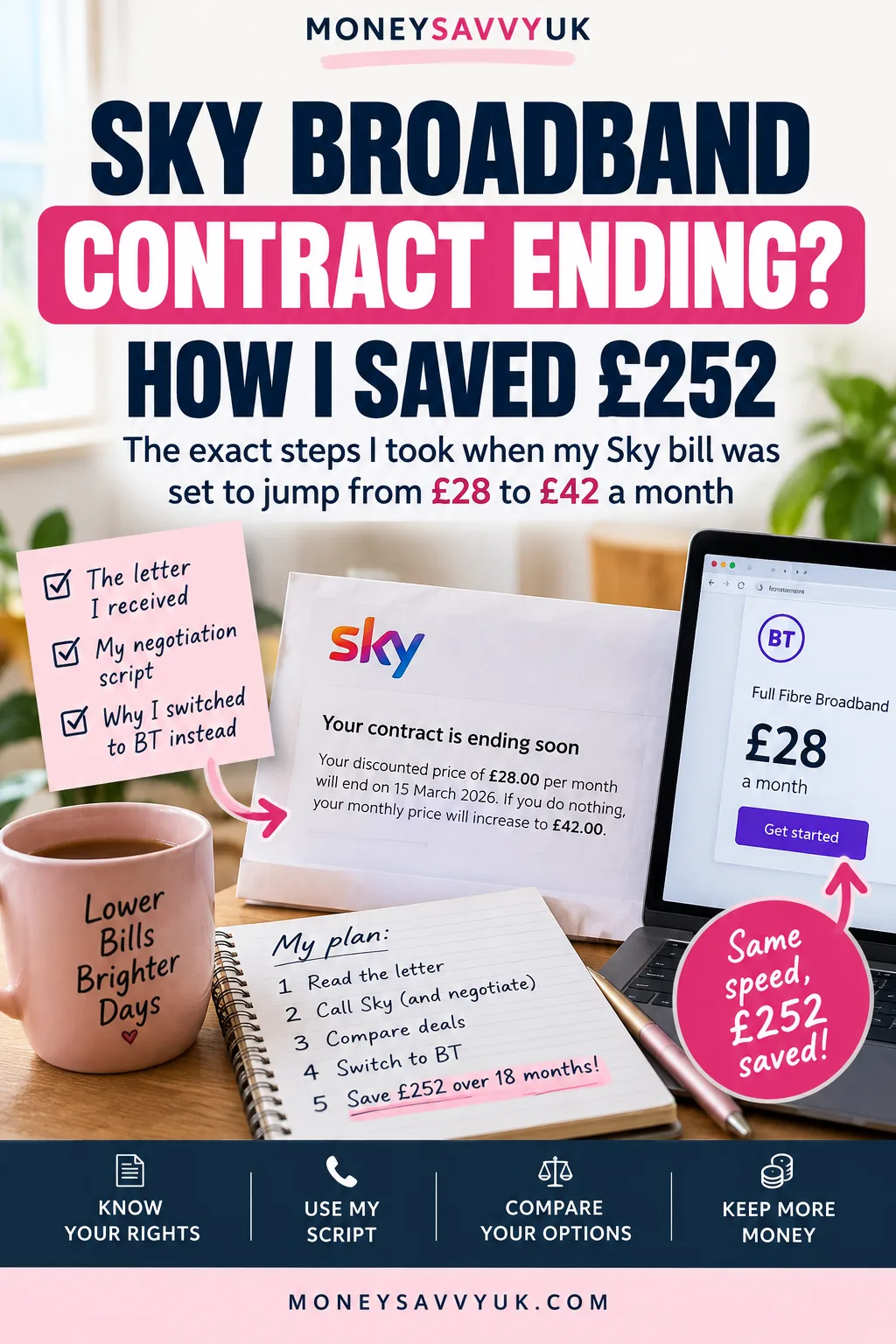
It wasn’t a clever trick or a special discount code. My Sky broadband contract was nearly over, and Sky sent me a letter saying that the £28 monthly price I’d been paying would become £42 a month if I didn’t do anything.
That was quite a jump for the same household bill. I rang Sky and asked whether they could keep me on my £28 discounted price. They said no. So I looked elsewhere and signed up to a new BT broadband contract at £28 a month.
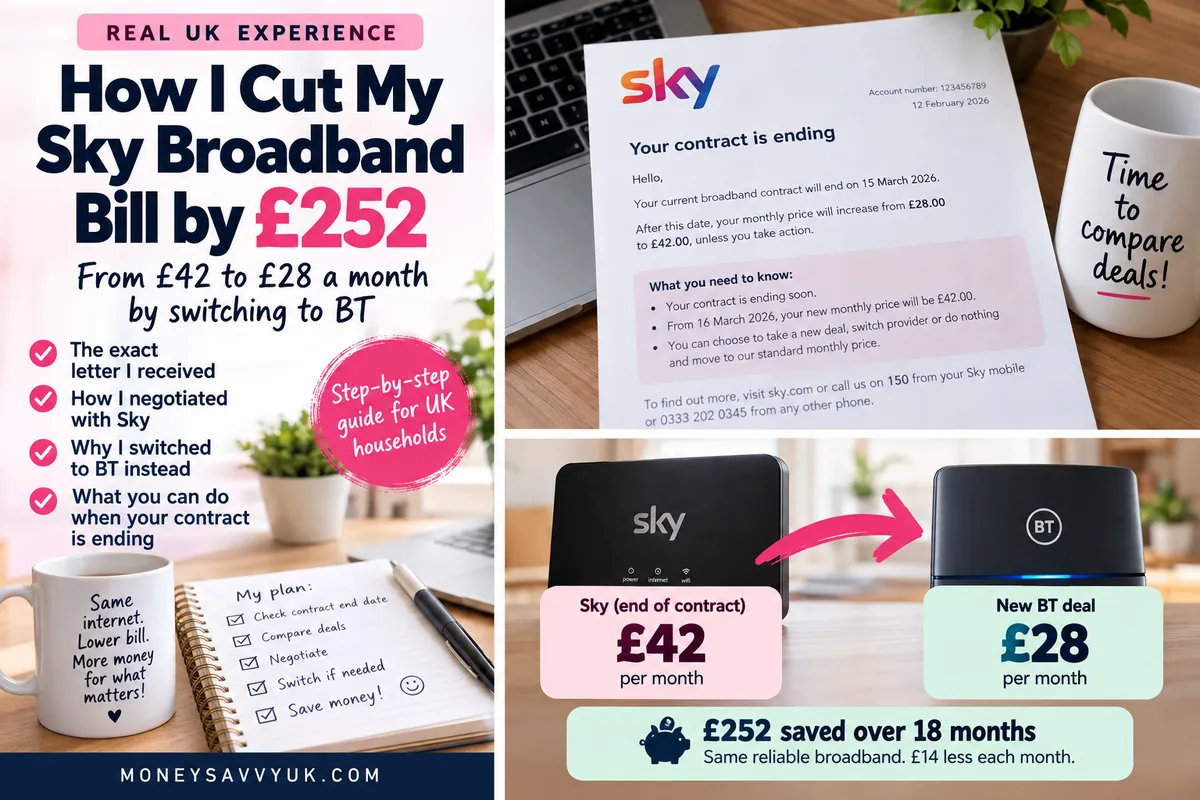
Compared with accepting Sky’s proposed £42 monthly charge, that was a £14 monthly difference — £252 over 18 months if the prices stayed the same. That’s a comparison of the quoted monthly rates, before any possible fees or later changes, rather than a promise that everyone can save the same amount.
What I want you to take from my experience is simple: don’t ignore your broadband end-of-contract notice. It could be the prompt you need to review a bill that’s about to become much more expensive.
The letter that made me check my Sky broadband bill
Like many people, I had been paying my broadband bill by Direct Debit. When a payment leaves your account automatically every month, it’s easy to forget when the original deal finishes. That’s why I recommend a regular subscription and Direct Debit audit, even for services you plan to keep.
Then the letter arrived. Sky explained that my contract was ending and that my discounted £28 rate would not continue automatically. If I did nothing, the price would rise to £42.
I didn’t want to pay an extra £14 a month just because my original offer had expired. My first thought was to ask Sky whether they could extend the same deal. That seemed fair enough: I was an existing customer, I was happy with the price I’d been paying, and I wanted to know whether they could keep it.
But Sky wouldn’t renew me at £28. I could have accepted the higher bill, but I decided to compare alternatives. I found BT broadband at £28 a month and switched.
The interesting part? My attempt to haggle didn’t work. The saving came from being prepared to change provider. I think that’s a more useful story than pretending every phone call ends with a brilliant retention discount.
Do broadband companies have to tell you when your contract is ending?
Yes. Under Ofcom’s rules, broadband, mobile, home-phone and pay-TV providers must send an end-of-contract notification between 10 and 40 days before your minimum contract term ends. It can arrive by letter, email or text; it doesn’t have to be a paper letter or arrive exactly one month beforehand.
According to Ofcom’s official guidance, the notice should tell you:
- When your minimum contract term ends.
- The price you’ve been paying and the price you’ll pay after the term ends.
- Any notice period required to leave.
- Your provider’s best available deals, including deals only offered to new customers.
- Relevant details about other contracts included in your bundle.
That information gives you a chance to compare, negotiate or switch rather than quietly moving onto a higher price. If you’re already out of contract, providers must also remind you annually and tell you about their best deals.
My tip: when that notification arrives, don’t file it away for later. Open it, check the two prices and put a reminder in your calendar to make a decision before your deal ends.
What I would do when a broadband contract-ending letter arrives
1. Check the old price against the new one
Look for the monthly price you’ve been paying and what you’ll pay after your minimum term. Write the difference down. Mine was easy to see: £42 minus £28 meant another £14 every month.
Then multiply the monthly difference by 12 or by the length of a comparable new contract. If you want to see where the money could go instead, my 50/30/20 budgeting guide for UK take-home pay offers a simple starting point. It makes the cost of doing nothing much more real.
2. Check exactly when the deal ends
You need the end date so you can allow enough time to compare providers, arrange a switch and avoid surprises. I use the same reminder approach for other renewals, including the steps in my car insurance renewal saving story. Also check whether your broadband is bundled with a phone or TV service. Those services may have different contract terms.
3. See what your current provider will offer
I contacted Sky first. You can do the same with your own broadband provider. You don’t need to be aggressive or threaten to cancel. Just explain that your price is rising and ask what existing-customer offers are available.
For me, the answer was no: Sky wouldn’t match my previous £28 rate. That’s when I started seriously looking at other providers.
4. Compare alternatives available at your address
Broadband deals aren’t always available everywhere. Check your postcode and compare the speed, reliability, contract length, setup fees, equipment and any scheduled price increases.
Don’t just choose the cheapest headline price. A package that costs less for the first few months but rises sharply later may not be better value. For more on the rules and what to check, read my UK broadband price-rise and switching guide.
5. Choose whether to stay or switch
If your provider makes a competitive offer, staying may be the easiest option. If not, you don’t have to accept the higher price just because you’ve been with them for years.
That’s exactly what happened to me. I couldn’t get the deal I wanted from Sky, so I moved to BT instead.
The polite broadband haggling script you can use
If you’re not sure what to say, keep it short. Here’s how I’d approach the conversation based on my experience:
“Hello, I’ve received a notice that my broadband contract is ending. My current discounted price is £28 a month, but the letter says it will rise to £42 if I don’t take action. I’d like to stay if you can offer a competitive deal. Can you keep me on my current price, or tell me the best renewal offer available?”
Of course, replace those figures with the ones on your own notice.
If the provider says it can’t match your current rate, you can reply:
“Thank you for checking. I’ll compare that offer with other providers before deciding. Could you confirm the new monthly price, minimum contract length, any future increases and any charges for leaving?”
That’s enough. You don’t have to pretend you’re cancelling if you’re not ready. And you don’t have to accept an offer on the spot.
What if your broadband provider refuses to lower the bill?
Then you have a choice to make. I think this is the part of broadband haggling advice that sometimes gets overlooked: asking for a discount is only one option.
If you’re happy with the provider and its renewal offer is competitive, staying may be sensible. But if you find a better suitable deal elsewhere, switching could be worth it.
Sky refused to keep my discounted £28 price. Rather than arguing, I compared other options and found a BT contract at the same monthly rate. The result was that I avoided moving onto Sky’s £42 price.
Don’t rely on a supposed secret retention number or assume a ‘win-back’ offer will arrive after you cancel. Use official contact channels and make a decision based on the offers you actually have.
How much did switching from Sky to BT save me?
Here’s the simple comparison based on the prices I was given:
| Broadband option | Monthly price | 18-month comparison |
|---|---|---|
| Sky after my discount ended | £42 | £756 |
| New BT deal | £28 | £504 |
| Difference | £14 | £252 |
These are straightforward calculations using the two monthly prices. They assume both prices remain unchanged for the full 18 months and exclude any installation charges, extras or subsequent price rises. They’re not a verified final bill-by-bill saving.
But they show why I acted. An extra £14 might not seem enormous in a single month. Over time, it adds up to money I’d rather keep for other household needs. Small recurring savings can also help when you’re building your first £1,000 emergency buffer.
Is a contract-ending price increase the same as a mid-contract price rise?
No, and the difference matters.
In my case, Sky was telling me that my discounted contract price would end. I was approaching the end of my minimum term and had the chance to choose a new deal or switch.
A mid-contract price rise is different. Ofcom says that when a provider raises prices beyond what was agreed in the contract, it generally must give at least 30 days’ notice and allow you 30 days to leave without an exit fee. But if the rise was clearly specified when you signed up, you may not have that right. See Ofcom’s guidance on telecoms price rises.
So please don’t assume that every price increase means you can cancel immediately without a charge. Read your notice and your contract terms.
Is it difficult to switch broadband providers?
For most residential broadband switches, Ofcom’s One Touch Switch process means you normally contact the new provider, which manages the switch with your old provider. The process can differ if you’re moving home or have a more complicated service arrangement.
Before you sign up, check the new service’s availability at your address, the installation date, any possible interruption and the contract terms. If you have Sky TV or other services, confirm separately what happens to them. I also wrote about how I cut the cost of Sky TV, which is a different decision from switching broadband.
Read Ofcom’s switching broadband guide for the official process.
Don’t overlook social broadband tariffs
If you’re receiving certain benefits, you may qualify for a lower-cost social broadband tariff. Eligibility varies by provider and can include benefits such as Universal Credit or Pension Credit.
These packages are intended to help eligible households access more affordable connections. Check the speed, availability and eligibility carefully rather than assuming the cheapest package will suit everyone. Ofcom keeps information about social tariffs.
Frequently asked questions about Sky broadband renewals
Does Sky have to tell me when my broadband contract ends?
Yes. Under Ofcom’s rules, broadband providers must send an end-of-contract notification between 10 and 40 days before your minimum term ends. It can be sent by letter, email or text.
Does the notice have to arrive exactly one month before my contract ends?
No. The regulatory window is 10 to 40 days before the end of the minimum term, not exactly 30 days. The notice must include key information about your contract and available deals.
Why did my Sky broadband price rise after my contract ended?
One common reason is that a promotional or discounted price has expired. Your end-of-contract notice should show what you were paying and what you’ll pay afterwards.
Can I ask Sky to keep my existing discounted price?
Yes, you can ask. But Sky isn’t obliged to offer the same promotional rate again. In my case, Sky refused to renew my £28 monthly deal, so I switched to BT.
What happens if Sky refuses to give me a discount?
Compare the full cost and suitability of alternative providers. You can stay if the offer still works for you or arrange a switch when appropriate. Check any early termination charges before leaving during a minimum term.
Can I cancel Sky broadband without a penalty?
If your minimum term has ended, you can generally leave without an early termination charge, although notice and other contractual charges may still apply. If you’re still in a minimum term, fees may apply unless you have a specific right to leave without them.
What is the best number to call to haggle with Sky?
Use the current contact options in your Sky account or on Sky’s official help website. Don’t rely on outdated forum numbers or promises of a secret retention department.
Does Sky VIP automatically give loyal customers a cheaper broadband price?
Don’t assume it does. Ask Sky which renewal offers are available to your account and compare the total cost with other providers.
If I accept a cheaper renewal offer, will I start a new contract?
Possibly. Ask whether the price requires a new minimum term, how long it lasts, and whether scheduled increases apply. Request written confirmation before agreeing.
Can I switch from Sky to BT when my contract ends?
Yes, if BT has a suitable service available at your address and you meet its terms. Compare the full price and arrange the switch using the new provider’s instructions.
The one habit I’d recommend to every broadband customer
Keep an eye on your contract end date. You don’t need to be a confident negotiator, and you don’t need to switch every time. You simply need to notice when a deal is about to end and make an active choice.
My Sky letter gave me that nudge. I asked for the old £28 price, Sky said no, and I found a BT alternative. That’s the whole story — and it’s a useful reminder that doing nothing can sometimes be the most expensive option.
If you’re reviewing other household bills, you might also find my guide to broadband price rises and your rights, subscription audit checklist, car insurance renewal saving story and Sky TV cost-cutting experience helpful.
Have you checked when your broadband contract ends? Even if you don’t want to make a call today, finding that date is a good first step.
Sources and review: Ofcom end-of-contract notifications; Ofcom price-rise rights; Ofcom switching guidance. Always check the latest contract terms before switching.